
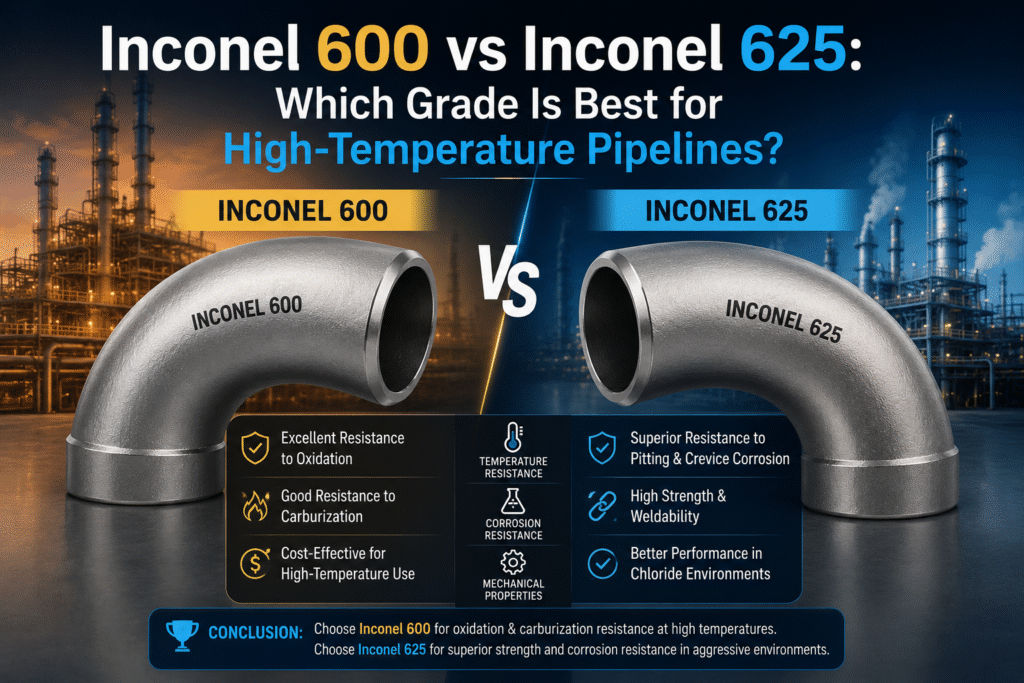
In sectors like oil and gas, petrochemicals, power generation, maritime engineering, and chemical processing, high-temperature pipeline systems are essential parts. These pipelines frequently function in harsh environments with corrosive fluids, high pressures, and high temperatures. To guarantee long-term dependability, operational safety, and economical performance, the proper material must be chosen.
Inconel 600 and Inconel 625 are two of the most used nickel-based alloys for demanding pipeline applications. Although both grades have outstanding heat and corrosion resistance, their distinct compositions and mechanical characteristics make them appropriate for various working environments.
Engineers, procurement teams, and project managers can choose the best material for high-temperature pipeline systems by being aware of the distinctions between these two alloys.
Understanding Inconel Alloys
The Inconel family of nickel-based superalloys is made to withstand hard conditions and high temperatures while retaining strength and resistance to corrosion. These alloys are specifically designed to resist exposure to harsh chemicals, oxidation, carburization, and thermal fatigue.
While additional alloying elements like chromium, molybdenum, niobium, and iron improve particular performance qualities, the high nickel content of Inconel alloys offers exceptional resistance to chloride stress corrosion cracking.
While Inconel 600 and Inconel 625 have some similarities, their compositions and intended uses are very different.
What Is Inconel 600?
Inconel 600 is a nickel-chromium-iron alloy known for its excellent oxidation resistance and stability at elevated temperatures.
Its typical chemical composition includes:
Nickel: 72% minimum
Chromium: 14–17%
Iron: 6–10%
The high nickel content provides outstanding resistance to chloride-induced stress corrosion cracking, while chromium enhances resistance to oxidation and scaling.
Key characteristics of Inconel 600 include:
Excellent oxidation resistance at high temperatures
Good resistance to carburization and nitriding
Strong performance in caustic environments
Good mechanical properties over a wide temperature range
Excellent weldability and fabricability
Inconel 600 is commonly used in furnace components, heat treatment equipment, nuclear reactors, and chemical processing systems.
What Is Inconel 625?
Inconel 625 is a nickel-chromium-molybdenum alloy strengthened through the addition of niobium and molybdenum.
Its typical chemical composition includes:
Nickel: 58% minimum
Chromium: 20–23%
Molybdenum: 8–10%
Niobium: 3–4%
Unlike Inconel 600, Inconel 625 derives its strength from solid-solution strengthening rather than heat treatment.
The addition of molybdenum and niobium significantly enhances the alloy’s resistance to aggressive corrosive environments and improves its mechanical properties.
Key characteristics of Inconel 625 include:
Exceptional resistance to pitting and crevice corrosion
Superior resistance to seawater and chloride environments
High tensile and yield strength
Excellent fatigue and thermal fatigue resistance
Outstanding weldability without post-weld heat treatment
Inconel 625 is widely used in offshore platforms, subsea pipelines, marine systems, aerospace components, and petrochemical facilities.
Inconel 600 vs Inconel 625: Key Differences
Corrosion Resistance
One of the most crucial considerations when choosing materials for high-temperature pipelines is corrosion resistance.
Inconel 600 has a good resistance to chloride stress corrosion cracking and performs remarkably well in oxidizing situations. Nevertheless, it offers little defense against localized corrosion types including pitting and crevice attack.
Because Inconel 625 contains more chromium and molybdenum, it offers much stronger corrosion resistance. It works incredibly effectively in settings that include:
Chlorides
Seawater
Acids
Sour gas
Aggressive process chemicals
For highly corrosive applications, Inconel 625 is generally the preferred choice.
High-Temperature Performance
Both alloys maintain excellent mechanical properties at elevated temperatures.
Inconel 600 performs particularly well in:
Oxidizing atmospheres
Carburizing environments
Nitrogen-rich environments
High-temperature furnace operations
Inconel 625 offers excellent resistance to thermal fatigue and retains high strength under cyclic temperature conditions.
When both high temperatures and corrosive environments are present, Inconel 625 typically delivers superior performance.
Mechanical Strength
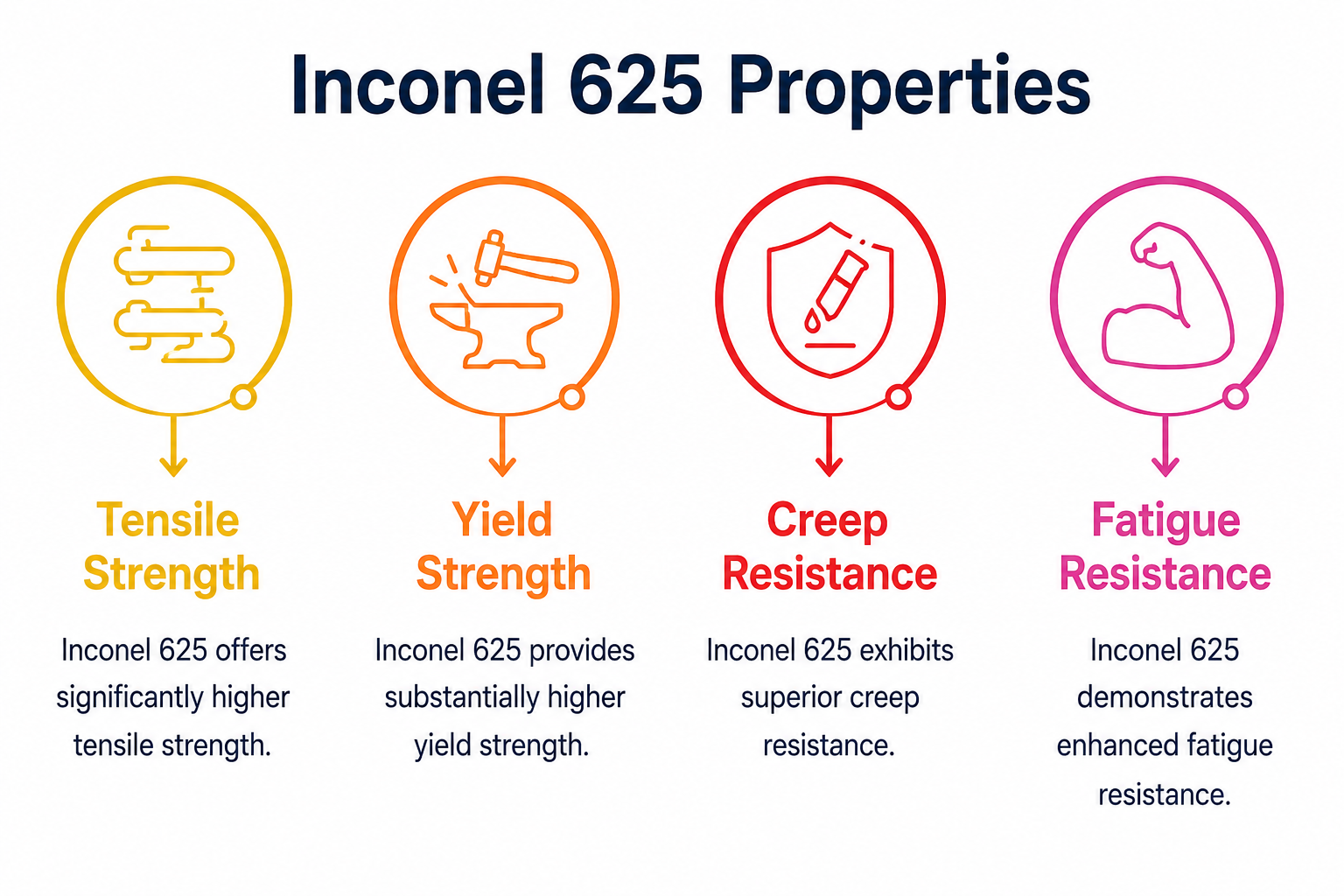
One of the most significant differences between the two alloys is their strength.
Inconel 625 provides substantially higher:
Tensile strength
Yield strength
Creep resistance
Fatigue resistance
Its superior mechanical properties make it ideal for high-pressure and high-stress pipeline applications.
Inconel 600 offers good high-temperature strength but is better suited for moderate mechanical loading conditions.
Weldability and Fabrication
Both alloys may be produced using standard techniques and are renowned for their superior weldability.
One benefit of Inconel 625, nevertheless, is that post-weld heat treatment is usually not necessary. This lowers installation costs and streamlines fabrication, particularly for intricate pipeline systems.
Although Inconel 600 has strong weldability as well, the fabrication process and service environment may call for further attention.
Cost Considerations
Material cost often influences alloy selection.
Inconel 600 is generally more cost-effective because it contains fewer expensive alloying elements.
Inconel 625 is more expensive due to its higher chromium, molybdenum, and niobium content.
However, the higher initial cost of Inconel 625 may be justified by its longer service life and lower maintenance requirements in aggressive environments.
Inconel 600 vs Inconel 625: Comparison Table
Property | Inconel 600 | Inconel 625 |
Primary Alloying Elements | Nickel-Chromium-Iron | Nickel-Chromium-Molybdenum-Niobium |
Minimum Nickel Content | 72% | 58% |
Oxidation Resistance | Excellent | Excellent |
Pitting Resistance | Moderate | Excellent |
Chloride Resistance | Good | Outstanding |
Seawater Resistance | Moderate | Excellent |
High-Temperature Strength | Good | Excellent |
Fatigue Resistance | Good | Excellent |
Weldability | Very Good | Excellent |
Post-Weld Heat Treatment | May be required | Generally not required |
Relative Cost | Lower | Higher |
Applications of Inconel 600 in High-Temperature Pipelines
Inconel 600 is widely used in applications where oxidation resistance is the primary concern.
Typical applications include:
Heat treatment furnaces
Steam generation systems
Nuclear power plants
Chemical processing pipelines
Ammonia production facilities
Thermal processing equipment
Its resistance to oxidation and carburization makes it particularly suitable for dry, high-temperature environments.
Applications of Inconel 625 in High-Temperature Pipelines
Inconel 625 is preferred for applications involving both high temperatures and aggressive corrosive conditions.
Common applications include:
Offshore and subsea pipelines
Marine systems
Sour gas pipelines
Petrochemical processing facilities
Flue gas desulfurization systems
Seawater handling systems
High-pressure transmission pipelines
Its superior combination of strength and corrosion resistance makes it an ideal choice for demanding environments.
Which Grade Is Best for High-Temperature Pipelines?
There is no universal answer because the best alloy depends on the specific operating conditions.
Choose Inconel 600 when:
The operating environment is primarily oxidizing
High-temperature performance is required without severe corrosion exposure
Mechanical loads are moderate
Cost optimization is important
Choose Inconel 625 when:
Pipelines are exposed to chlorides or seawater
High mechanical strength is required
Thermal cycling is frequent
Corrosive process fluids are present
Long-term reliability is a top priority
For most modern high-temperature pipeline applications in oil and gas, offshore, marine, and petrochemical industries, Inconel 625 offers broader performance capabilities.
Related Reports
Inconel vs Hastelloy Fittings: Which High Nickel Alloy is Right for Your Project?
What Is Fusion Bonded Epoxy (FBE) Coating? Benefits for Oil & Gas Pipelines & Fittings
What Is Inconel Used For in Oil and Gas? Grades, Properties & Applications
Types of Stainless Steel Fittings: SS 310, 904L, 317L & When to Use Them
Conclusion
High-performance nickel-based alloys like Inconel 600 and 625 are made to function in harsh conditions. While Inconel 625 offers exceptional mechanical strength and tolerance to harsh corrosive conditions, Inconel 600 offers higher oxidation resistance and cost-effective performance in high-temperature applications.
Inconel 625 is typically the best option for pipelines that operate in difficult conditions with high temperatures, high pressures, chlorides, or exposure to seawater. However, Inconel 600 continues to be a dependable and efficient option for less corrosive applications where oxidation resistance and cost are the major issues.
The best alloy for long-term pipeline performance and dependability will be chosen by carefully assessing working conditions, corrosion hazards, temperature requirements, and lifecycle costs.
How We Support You
Selecting the right Inconel alloy grade is essential for ensuring long-term performance, corrosion resistance, and mechanical reliability in high-temperature pipeline applications.
Our team helps you determine whether Inconel 600 or Inconel 625 is the best choice based on operating temperature, pressure conditions, media composition, corrosion risks, and project specifications.
Our Support Includes:
Expert guidance on selecting between Inconel 600 and Inconel 625 for high-temperature piping systems
Recommendations based on operating temperature, pressure, oxidation resistance, and corrosion requirements
Technical support for applications involving high-temperature gases, chlorides, acids, seawater, and aggressive process media
Assistance with evaluating resistance to oxidation, carburization, pitting, crevice corrosion, and stress corrosion cracking
Guidance on material selection for heat exchangers, process piping, furnace components, exhaust systems, and offshore pipelines
Support with compliance to ASTM, ASME, ANSI, API, NACE, and project-specific standards
Assistance with selecting pipes, fittings, flanges, valves, and welded assemblies in the appropriate Inconel grade
Support with material test certificates (MTCs), technical documentation, and third-party inspection requirements
Custom solutions for sizes, wall thicknesses, pressure ratings, and project-specific fabrication needs
Fast quotations and dependable bulk supply support for projects across the oil & gas, petrochemical, power generation, aerospace, and marine sectors
Whether your project involves high-temperature process pipelines, chemical processing units, offshore platforms, power plants, or heat treatment facilities, we provide reliable Inconel alloy solutions tailored to your operating conditions, corrosion challenges, and long-term performance requirements.