
Monel 400 vs Monel K-500: Key Differences for Marine & Seawater Applications
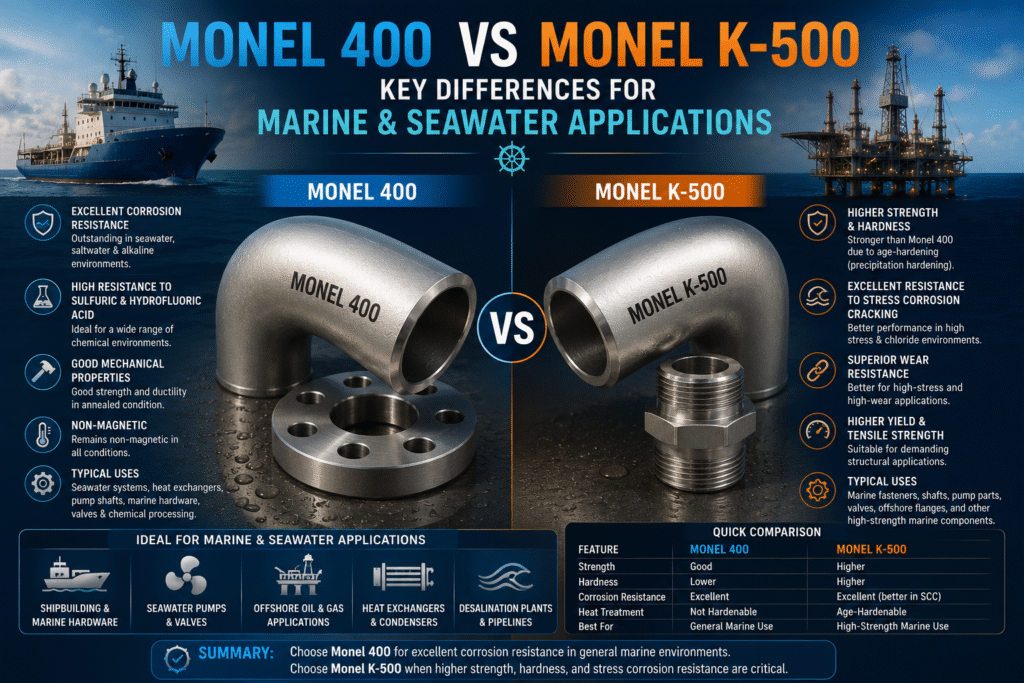
Piping systems and industrial equipment face some of the most difficult operating conditions in marine and ocean environments. Conventional metals can be quickly degraded by prolonged exposure to saltwater, high humidity, biofouling, and chloride-rich conditions. This can result in corrosion, expensive maintenance, and early equipment failure. High-performance nickel-copper alloys are used by sectors such offshore […]
Inconel 600 vs Inconel 625: Which Grade Is Best for High-Temperature Pipelines?
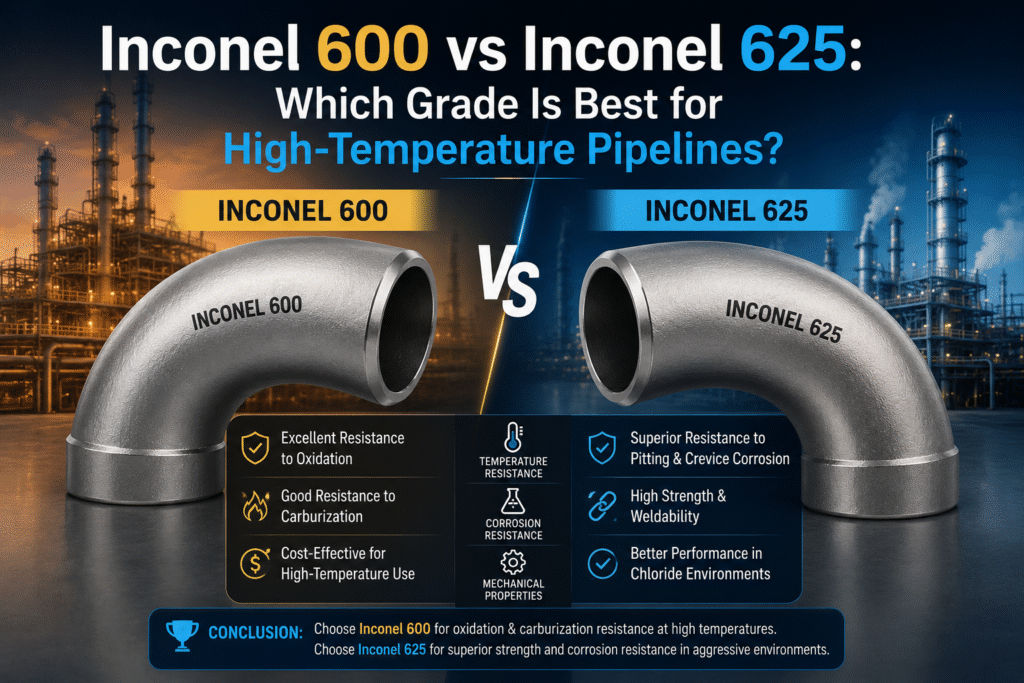
In sectors like oil and gas, petrochemicals, power generation, maritime engineering, and chemical processing, high-temperature pipeline systems are essential parts. These pipelines frequently function in harsh environments with corrosive fluids, high pressures, and high temperatures. To guarantee long-term dependability, operational safety, and economical performance, the proper material must be chosen. Inconel 600 and Inconel 625 […]
Monel 400 vs Inconel 625: Which Alloy Wins for Seawater & Marine Pipeline Applications?
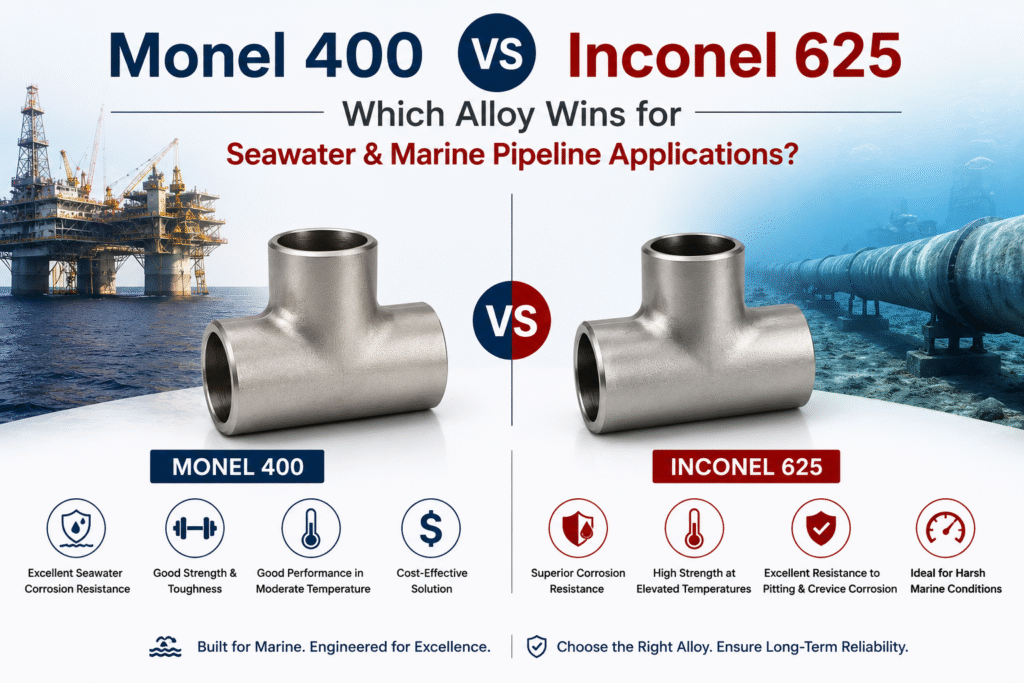
Offshore and marine businesses work in some of the most hostile conditions on the planet. Conventional piping materials can be rapidly damaged by exposure to seawater, salt corrosion, high pressure, and extreme temperatures. For this reason, maritime pipeline applications frequently employ high-performance nickel alloys like Monel 400 and Inconel 625. Engineers frequently compare Monel 400 […]
Hastelloy C276 vs C22: Key Differences for Chemical & Petrochemical Plant Buyers
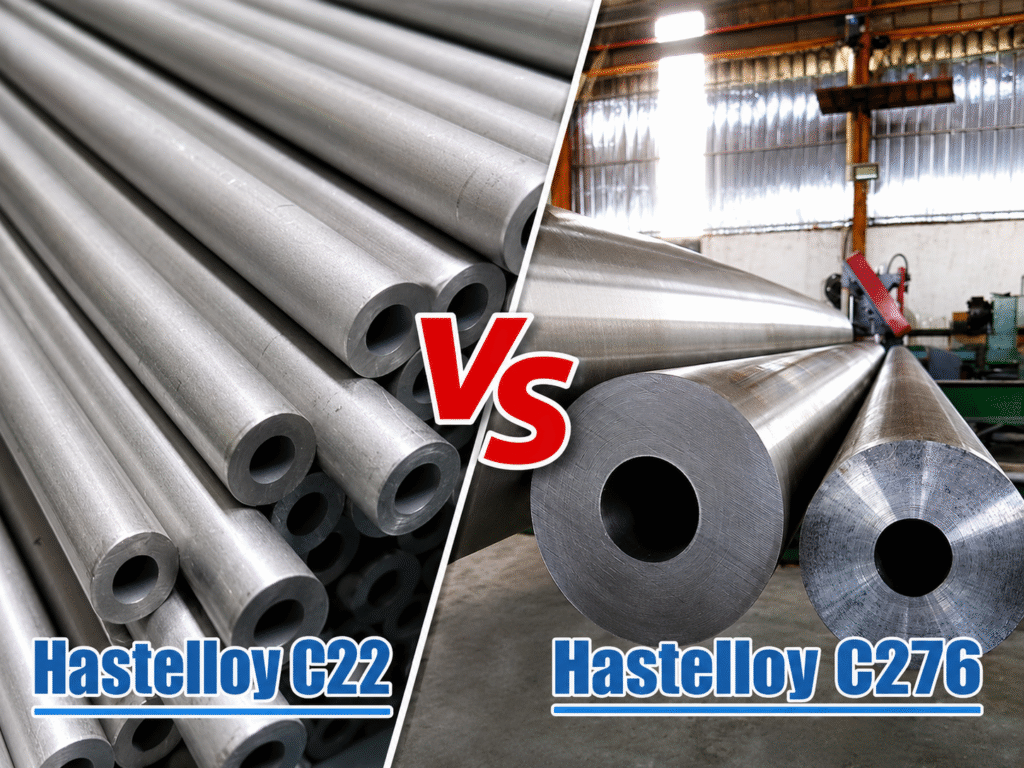
Material selection is one of the most important decisions in chemical processing and petrochemical industries because equipment and piping systems often operate in highly corrosive environments involving aggressive chemicals, acidic media, chloride exposure, oxidizing compounds, and high-temperature process conditions. Choosing the wrong alloy can result in corrosion failures, unplanned shutdowns, safety hazards, contamination risks, and […]