
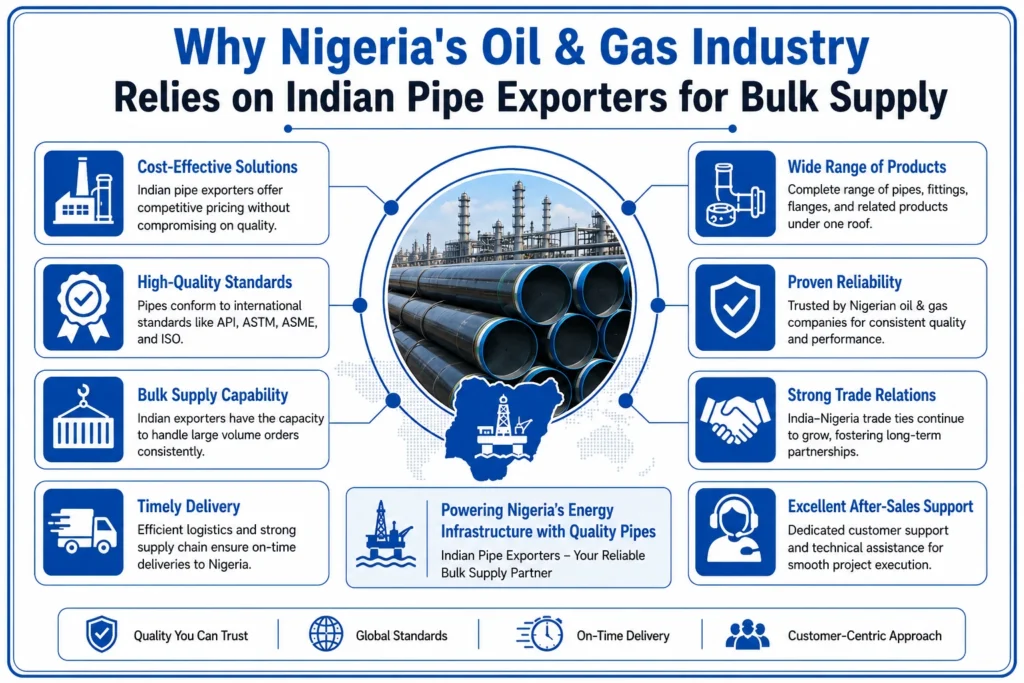
Nigeria is one of the main producers of gas and oil in Africa, thus there is a constant need for dependable piping materials for upstream, middle, and downstream operations. Industrial pipes are an essential component of Nigeria’s energy infrastructure, from refineries and the transportation of crude oil to gas processing plants, terminals, and petrochemical facilities.
Bulk pipe procurement needs more than just competitive pricing for big projects. Consistent quality, adherence to international standards, thorough material documentation, and reliable delivery dates are all required by buyers. For Nigerian oil and gas businesses, EPC contractors, distributors, and project procurement teams, Indian pipe exporters have emerged as a significant source.
Large amounts of carbon steel, stainless steel, alloy steel, duplex, and nickel alloy pipes for demanding applications can be sourced because of India’s well-established manufacturing base, wide product availability, and export infrastructure.
Growing Demand for Industrial Pipes in Nigeria
Nigeria’s oil and gas industry requires piping materials throughout the entire energy value chain.
Typical applications include:
Crude oil pipelines
Natural gas pipelines
Flowlines and gathering systems
Refineries
Gas processing plants
LNG-related infrastructure
Petrochemical facilities
Storage terminals
Offshore platforms
Water injection systems
Fire protection systems
Contractors and distributors need suppliers who can handle both standard and specialty plumbing requirements when new energy projects are constructed and old infrastructure is renovated.
Why Indian Pipe Exporters Are Competitive
India has a sizable production and supply capacity and a well-established metal and engineering sector. As a result, a wide variety of pipe materials, sizes, specifications, and product combinations are available to Indian exporters.
For Nigerian buyers, key advantages can include:
Wide Product Availability
Indian suppliers can source or supply various categories of industrial pipes, including:
Seamless steel pipes
Welded steel pipes
ERW pipes
Carbon steel pipes
Stainless steel pipes
Alloy steel pipes
Duplex stainless steel pipes
Super duplex pipes
Nickel alloy pipes
This allows buyers to consolidate multiple material requirements through fewer supply partners.
Carbon Steel Pipes for Oil & Gas Applications
Carbon steel remains one of the most widely used materials in oil and gas infrastructure because of its combination of strength, availability, and cost-effectiveness.
Common specifications include:
ASTM A106
ASTM A53
API 5L
ASTM A333
API 5L line pipe is particularly important for pipeline applications involving the transportation of oil and natural gas.
Depending on project requirements, buyers may require grades such as:
X42
X52
X60
X65
X70
The appropriate grade depends on design pressure, pipeline conditions, applicable specifications, and engineering requirements.
Stainless Steel Pipes for Corrosive Applications
Applications where corrosion resistance is crucial are also part of Nigeria’s energy infrastructure.
For process systems, chemical services, water treatment, and other applications where carbon steel might not offer adequate corrosion resistance, stainless steel pipes are frequently chosen.
Popular grades include:
304
304L
316
316L
904L
For offshore and marine environments, higher-alloy materials may be required depending on chloride exposure and process conditions.
Duplex and Super Duplex for Offshore Projects
Piping in offshore oil and gas operations may be exposed to corrosive process fluids, high pressure, seawater, and chlorides.
High strength and corrosion resistance are combined in duplex stainless steel, which includes the 2205 family.
Super duplex grades like UNS S32750 and UNS S32760 may be chosen for more hostile settings.
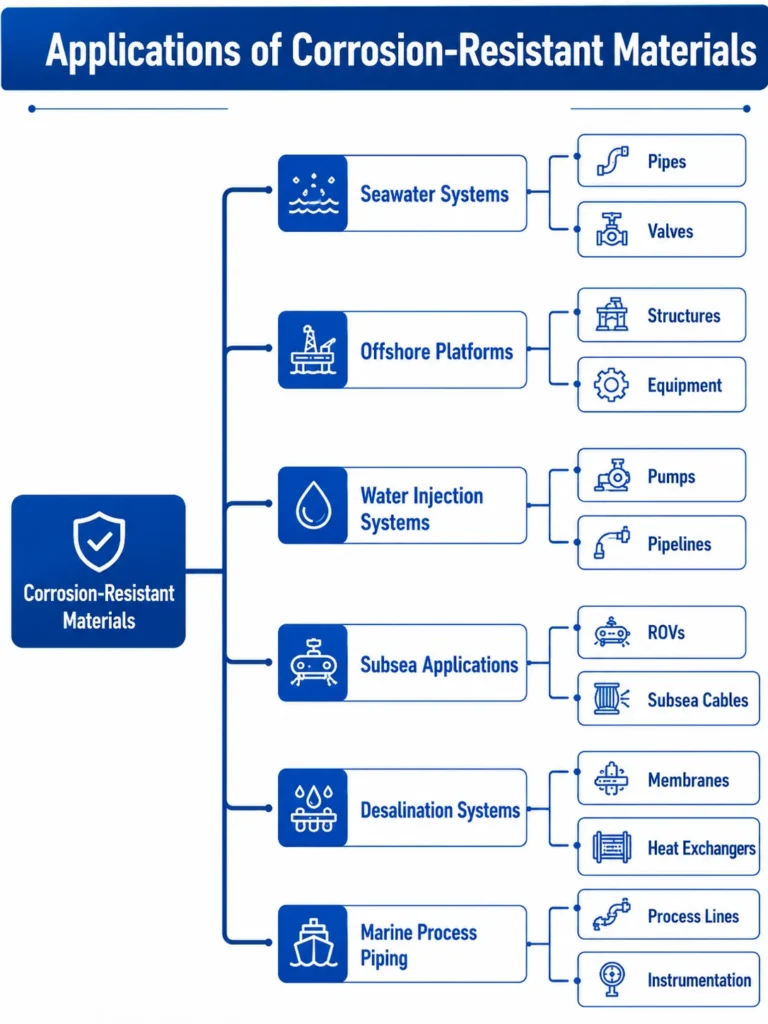
These materials are commonly considered for:
Seawater systems
Offshore platforms
Water injection systems
Subsea applications
Desalination systems
Marine process piping
Bulk Supply Is Critical for Large Projects
Large Nigerian oil and gas projects may require substantial quantities of pipes in different sizes, wall thicknesses, and material grades.
Bulk procurement provides several potential advantages:
Better procurement efficiency
Fewer individual purchase orders
Simplified logistics coordination
Consistent material sourcing
Improved project scheduling
Reduced risk of supply interruptions
However, bulk orders also require strong inventory planning and quality control. A supplier must be capable of maintaining consistent specifications across large quantities.
Importance of International Pipe Standards
Oil and gas projects cannot select piping materials based on price alone. Products must meet the applicable technical standards and project specifications.
Commonly requested standards include:
ASTM
ASTM specifications cover a wide range of steel and alloy materials and pipe products.
Examples include:
ASTM A106
ASTM A312
ASTM A335
ASTM A790
ASME
ASME standards are widely used for piping dimensions, components, pressure systems, and related engineering requirements.
Examples include:
ASME B36.10M
ASME B36.19M
ASME B16.5
ASME B16.47
API
API specifications are particularly important for petroleum and natural gas applications.
API 5L is one of the most widely recognized specifications for line pipe.
Using internationally recognized standards helps Nigerian buyers align material procurement with project engineering requirements.
Material Traceability and Documentation
For critical oil and gas applications, documentation is just as important as the physical product.
Bulk pipe shipments may require documentation such as:
Mill Test Certificates
Chemical composition reports
Mechanical test results
Heat number traceability
Hydrostatic test certificates
Ultrasonic testing reports
Radiographic testing reports where applicable
Positive Material Identification records
Inspection certificates
Certificate of conformity
Buyers should ensure that heat numbers marked on the pipes correspond with the relevant certificates.
This provides traceability from the manufactured material through delivery and installation.
Reliable Export Logistics
A key component of successful procurement for international bulk supplies is logistical planning.
To reduce damage from handling, moisture, and prolonged travel, industrial pipes must be adequately prepared for maritime shipping.
Export packaging may include:
Protective pipe end caps
Steel strapping
Waterproof wrapping
Bundling
Wooden supports or crates
Clearly identified labels
The supplier should also coordinate shipping documentation and provide accurate packing information to support customs clearance and receiving procedures.
Supporting Nigerian EPC Contractors and Distributors
Indian pipe exporters can serve different types of Nigerian customers, including:
EPC contractors
Oil & gas companies
Engineering companies
Pipeline contractors
Fabricators
Industrial distributors
Petrochemical companies
Government infrastructure projects
A supplier with a broad product range can support both large project orders and replacement or maintenance requirements.
What Nigerian Buyers Should Look for in an Indian Pipe Exporter
Before placing a bulk order, procurement teams should evaluate the supplier based on:
Product Range
Check whether the supplier can provide the required pipe grades, sizes, schedules, and manufacturing types.
Quality Assurance
Confirm that products are manufactured and tested according to the required standards.
Documentation
Make sure complete MTCs, inspection records, and traceability documentation can be supplied.
Production and Stock Capacity
Large projects require suppliers capable of meeting quantities without compromising delivery schedules.
Export Experience
Experience with international shipments can help reduce documentation and logistics problems.
Technical Support
A knowledgeable supplier should be able to assist with material specifications, dimensions, testing requirements, and project documentation.
Metallon Pipings: Supporting Bulk Industrial Pipe Requirements
Metallon Pipings supplies industrial pipes, fittings, and flanges for oil & gas, petrochemical, offshore, marine, power, and infrastructure applications.
Its product range includes:
Carbon steel pipes
Stainless steel pipes
Alloy steel pipes
Duplex stainless steel pipes
Super duplex pipes
Nickel alloy pipes
Pipe fittings
Industrial flanges
For international customers, including buyers across Africa, reliable documentation, material traceability, quality inspection, packaging, and export coordination are essential components of the supply process.
Related Reports
Inconel vs Hastelloy Fittings: Which High Nickel Alloy is Right for Your Project?
What Is Fusion Bonded Epoxy (FBE) Coating? Benefits for Oil & Gas Pipelines & Fittings
What Is Inconel Used For in Oil and Gas? Grades, Properties & Applications
Types of Stainless Steel Fittings: SS 310, 904L, 317L & When to Use Them
Conclusion
For pipelines, refineries, gas processing facilities, offshore installations, and petrochemical projects, Nigeria’s oil and gas sector needs a consistent supply of industrial piping materials. Because of their extensive production environment, product availability, competitive procurement prospects, and proven international export capabilities, Indian pipe exporters present an appealing sourcing choice.
However, Nigerian purchasers should consider factors other than pricing when choosing a supplier, such as quality, technical compliance, traceability, bulk-supply capability, documentation, and delivery reliability.
Nigerian EPC contractors, distributors, and oil and gas companies can find certified industrial pipes and piping components appropriate for demanding energy applications while maintaining effective and dependable procurement procedures by collaborating with an experienced export partner like Metallon Pipings.
How We Support You
Selecting a reliable Indian pipe exporter is essential for ensuring consistent quality, competitive pricing, timely delivery, and dependable bulk supply for Nigeria’s demanding oil & gas industry. Our team supports Nigerian EPC contractors, distributors, procurement teams, and industrial buyers with piping solutions tailored to project specifications and international standards.
Our Support Includes:
Expert guidance on sourcing pipes, pipe fittings, flanges, bends, and other piping components from Indian manufacturers and exporters
Recommendations for suitable materials, including carbon steel, stainless steel, duplex, super duplex, alloy steel, and nickel alloys
Technical support based on operating pressure, temperature, corrosion exposure, fluid characteristics, and project requirements
Assistance with compliance to ASTM, ASME, ANSI, API, ISO, NACE, and project-specific standards
Guidance on selecting seamless and welded pipes, elbows, tees, reducers, flanges, long radius bends, and custom piping components
Support with Material Test Certificates (MTCs), PMI reports, heat treatment records, dimensional inspection, NDT, and third-party inspection documentation
Assistance with material traceability, quality assurance, inspection plans, packaging, marking, and export documentation
Reliable bulk supply support for oil & gas pipelines, refineries, petrochemical plants, offshore facilities, and energy infrastructure
Competitive quotations and assistance with large-volume procurement, production scheduling, and shipment planning
Export support for deliveries to Nigeria and other African markets, helping streamline procurement from India
Whether your project involves crude oil pipelines, natural gas systems, refineries, FPSO facilities, petrochemical plants, or offshore developments, we provide dependable pipe and piping component solutions from India focused on quality, documentation, competitive sourcing, and reliable bulk delivery for Nigeria’s oil & gas sector.