
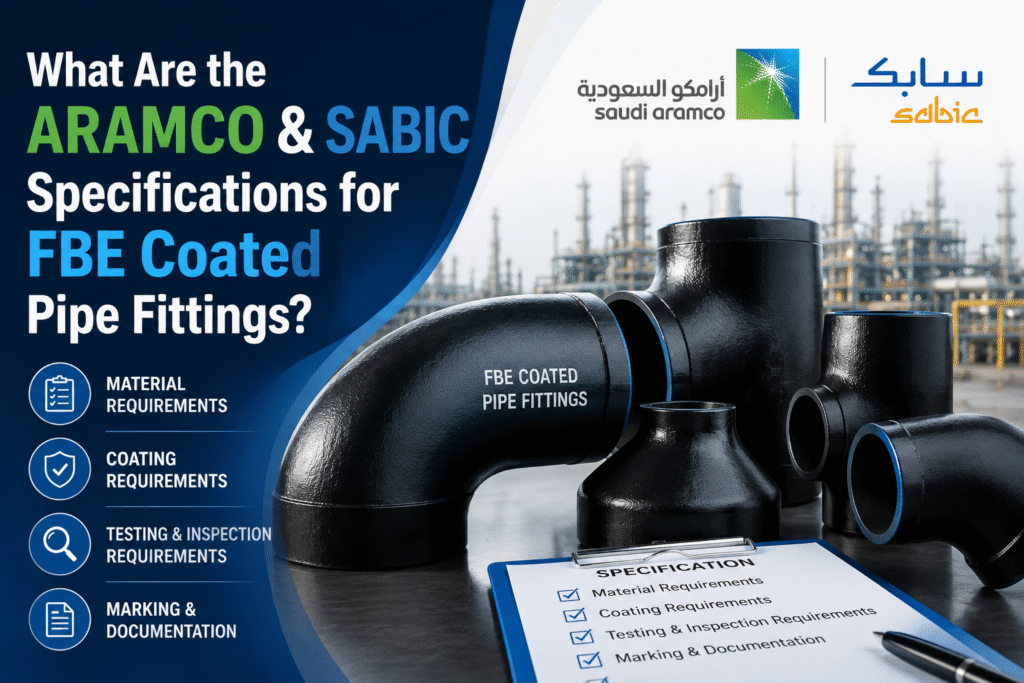
The Middle East’s water infrastructure, petrochemical, and oil and gas sectors are subject to some of the strictest engineering regulations in the world. Piping components used in large-scale projects must be resistant to harsh circumstances, high humidity, salinity, extreme temperatures, and difficult installation settings. Organizations like Saudi Aramco and SABIC have set strict requirements for materials, coatings, testing, and quality assurance in order to guarantee long-term asset integrity.
Fusion Bonded Epoxy (FBE) coating is one of the most used corrosion protection solutions for pipelines and fittings. For subterranean pipelines, offshore facilities, petrochemical plants, water transmission systems, and industrial process networks, FBE-coated pipe fittings are crucial because they offer a strong defense against mechanical damage and external corrosion.
For manufacturers, suppliers, and contractors serving projects in the Gulf region, understanding ARAMCO and SABIC requirements for FBE-coated pipe fittings is critical for ensuring compliance, avoiding project delays, and achieving approval for supply.
Why FBE Coated Pipe Fittings Are Important
FBE is a thermosetting powder coating applied to steel surfaces through a controlled heat-curing process. Once cured, the coating forms a strong chemical bond with the metal substrate, creating a durable, corrosion-resistant layer.
FBE-coated fittings offer several benefits, including:
Excellent corrosion resistance
Strong adhesion to the steel surface
Compatibility with cathodic protection systems
High impact and abrasion resistance
Long-term performance in harsh environments
Reduced maintenance requirements
Common FBE-coated fittings include:
Elbows
Tees
Reducers
Caps
Flanges
Long radius bends
Induction bends
These components are widely used in buried and submerged pipelines where long-term corrosion protection is essential.
International Standards Referenced by ARAMCO and SABIC
Although Saudi Aramco and SABIC maintain their own internal engineering standards, they typically reference internationally recognized specifications for coating systems and pipe fittings.
Commonly referenced standards include:
Coating Standards
ISO 21809 series for external pipeline coatings
CSA Z245.20 for plant-applied external FBE coatings
AWWA C213 for FBE coatings used in water systems
DIN 30670 and DIN 30678 for pipeline coating systems
NACE standards for corrosion control and cathodic protection compatibility
Manufacturing Standards
ASME B16.9 for factory-made buttweld fittings
ASME B16.49 for induction bends
ASTM A234 for carbon steel fittings
ASTM A420 for low-temperature carbon steel fittings
ASTM A403 for stainless steel fittings
These standards establish baseline requirements for manufacturing, coating application, inspection, and performance testing.
Saudi Aramco Specifications for FBE Coated Pipe Fittings
In order to guarantee long-term dependability in upstream, middle, and downstream applications, Saudi Aramco upholds extensive engineering requirements.
Strict regulations pertaining to surface preparation, coating application, inspection, testing, and documentation usually apply to FBE-coated fittings supplied to Aramco projects.
Surface Preparation Requirements
Proper surface preparation is critical for coating performance.
Saudi Aramco specifications generally require:
Abrasive blasting to a near-white metal finish
Complete removal of rust, mill scale, oil, and contaminants
Controlled surface profile to ensure proper coating adhesion
Verification of surface cleanliness before coating application
Inadequate surface preparation can compromise adhesion and lead to premature coating failure.
Coating Application Requirements
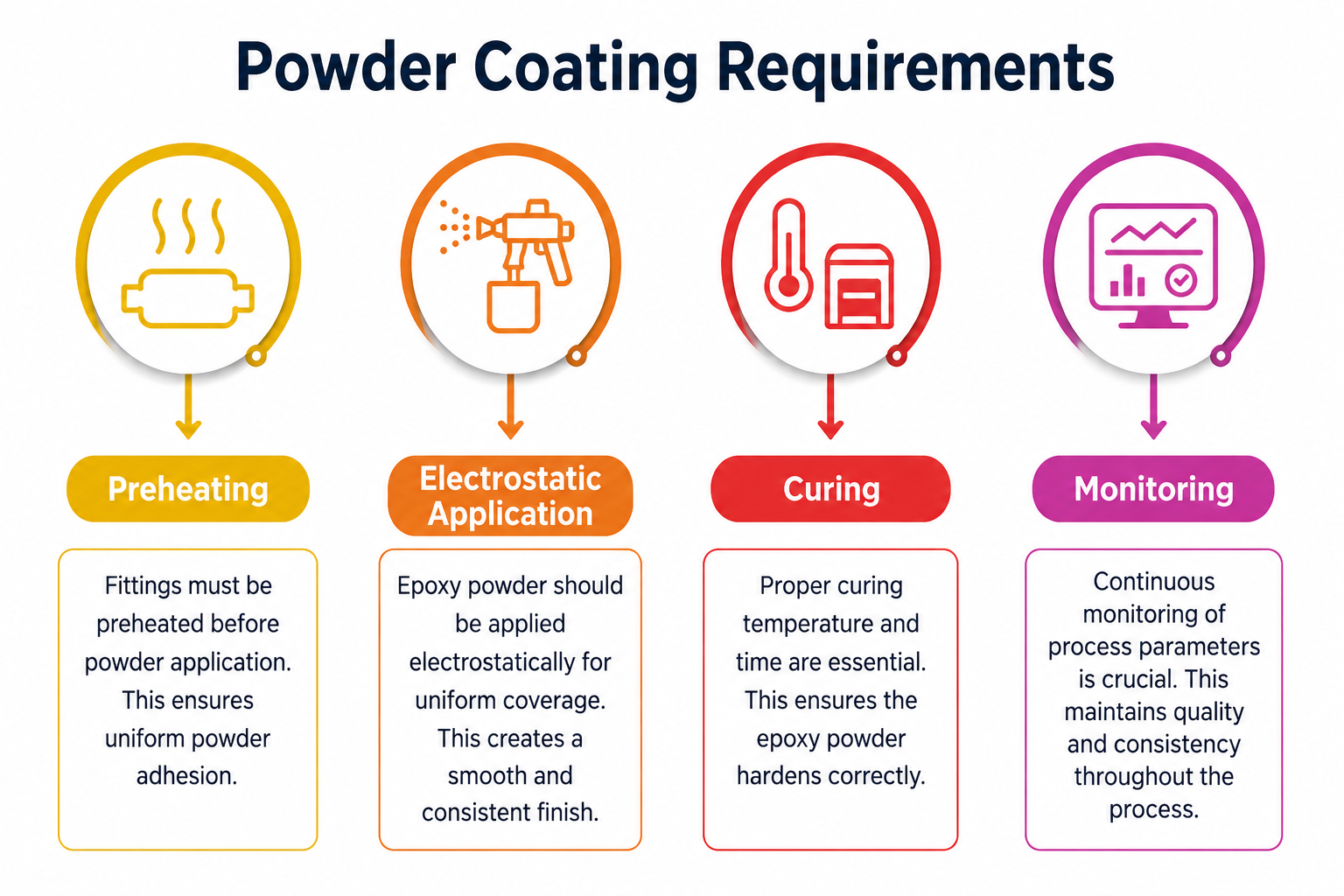
The coating process must be carefully controlled to ensure consistent quality.
Key requirements typically include:
Controlled preheating of fittings before powder application
Uniform electrostatic application of epoxy powder
Proper curing temperature and curing time
Continuous monitoring of process parameters
Only qualified coating applicators using approved procedures are generally permitted to perform coating operations.
Coating Thickness
The required dry film thickness varies depending on the service environment and project specifications.
For many transmission pipeline applications, FBE coating thickness typically ranges from 300 to 500 microns. More severe environments may require thicker coating systems or multilayer protection.
Uniform coating thickness is essential to ensure effective corrosion protection.
Inspection and Performance Testing
Saudi Aramco projects typically require extensive inspection and testing of coated fittings.
Common tests include:
Dry film thickness measurement
Adhesion testing
Impact resistance testing
Flexibility testing
Cathodic disbondment testing
Holiday detection
Water absorption testing
Abrasion resistance testing
These tests verify the coating’s ability to withstand aggressive operating conditions and maintain long-term performance.
Documentation and Traceability
Saudi Aramco places significant emphasis on quality documentation and material traceability.
Typical requirements include:
Mill test certificates
Coating batch records
Inspection and test reports
Procedure qualification records
Traceability documentation
Third-party inspection approval
Manufacturers must maintain complete records throughout the production process.
SABIC Specifications for FBE Coated Pipe Fittings
SABIC has a variety of industrial and petrochemical operations that need extremely dependable piping systems.
While many of SABIC’s requirements are in line with international standards, chemical compatibility, long-term durability, and process safety are given more weight.
Material and Service Compatibility
SABIC projects often involve exposure to aggressive chemicals and elevated operating temperatures.
As a result, coated fittings must demonstrate compatibility with:
Process fluids
Operating temperatures
Chemical exposure conditions
Environmental factors
Material selection and coating performance must be evaluated together to ensure long-term reliability.
Coating Qualification Requirements
FBE coatings used in SABIC facilities typically undergo comprehensive qualification testing.
Common requirements include:
Adhesion testing
Chemical resistance testing
Thermal ageing evaluation
Impact resistance testing
Holiday inspection
Cathodic disbondment testing
The objective is to verify coating performance throughout the expected service life of the asset.
Quality Assurance and Inspection
SABIC generally requires robust quality management processes throughout manufacturing and coating operations.
Typical requirements include:
Approved coating procedures
Inspection and test plans (ITPs)
Qualified coating personnel
Third-party inspections
Full material traceability
Documented repair procedures
These measures help ensure consistent product quality and compliance with project specifications.
Key Differences Between ARAMCO and SABIC Requirements
While both organizations demand high levels of quality and performance, their priorities differ based on operating environments.
Parameter | Saudi Aramco | SABIC |
Primary Industry Focus | Oil and gas transmission | Petrochemical processing |
Typical Environment | Buried, offshore, and cross-country pipelines | Industrial and chemical facilities |
Primary Concern | External corrosion protection | Chemical compatibility and durability |
Inspection Requirements | Extensive vendor qualification and third-party inspection | Comprehensive quality assurance and process validation |
Operating Conditions | Long-distance transmission systems | Process-intensive environments |
Despite these differences, both organizations emphasize long-term corrosion protection, quality control, and supplier qualification.
Best Practices for Compliance
Manufacturers and suppliers seeking approval for ARAMCO and SABIC projects should follow these best practices:
Review project specifications thoroughly
Confirm compliance with all referenced international standards
Use approved raw materials and coating systems
Implement qualified coating procedures
Maintain strict process controls
Conduct all required inspections and tests
Ensure complete product traceability
Coordinate with third-party inspectors when required
Verify compatibility with cathodic protection systems
Early engagement with project engineers and procurement teams can help prevent non-conformances and reduce approval delays.
Related Reports
Inconel vs Hastelloy Fittings: Which High Nickel Alloy is Right for Your Project?
What Is Fusion Bonded Epoxy (FBE) Coating? Benefits for Oil & Gas Pipelines & Fittings
What Is Inconel Used For in Oil and Gas? Grades, Properties & Applications
Types of Stainless Steel Fittings: SS 310, 904L, 317L & When to Use Them
Conclusion
In the world’s petrochemical and energy sectors, Saudi Aramco and SABIC uphold some of the strictest standards for FBE coated pipe fittings. Both organizations add stringent project-specific requirements for coating application, testing, inspection, and documentation to internationally renowned standards as ISO 21809, ASME, ASTM, CSA, and NACE.
Manufacturers and contractors must pay close attention to surface preparation, coating quality, performance testing, and traceability in order to achieve compliance. Suppliers may guarantee dependable product performance, increase project success rates, and satisfy the high standards of significant industrial projects in the GCC area by comprehending and abiding by these requirements.
How We Support You
Meeting ARAMCO and SABIC specifications for FBE coated pipe fittings is essential for ensuring long-term corrosion protection, project compliance, and reliable pipeline performance in demanding oil, gas, petrochemical, and industrial applications.
Our team helps you select and source Fusion Bonded Epoxy (FBE) coated pipe fittings that align with the specific technical requirements of major EPC contractors, end users, and industry standards across the GCC region.
Our Support Includes:
Expert guidance on ARAMCO and SABIC coating specifications, approval requirements, and project documentation
Recommendations for FBE coating systems based on operating temperature, environmental conditions, and service requirements
Technical support for protection against corrosion, moisture ingress, soil chemicals, abrasion, impact damage, and cathodic disbondment
Assistance with compliance to Saudi Aramco Engineering Standards (SAES), Saudi Aramco Material System Specifications (SAMSS), ASTM, ASME, API, ISO, and project-specific requirements
Guidance on selecting FBE coated elbows, tees, reducers, flanges, bends, and other pipeline components
Support with coating inspection procedures, quality plans, material test certificates (MTCs), and third-party inspection documentation
Recommendations for buried pipelines, cross-country transmission lines, refinery facilities, petrochemical plants, and water infrastructure projects
Assistance with coating quality verification, including adhesion testing, holiday detection, thickness measurement, impact resistance, and cathodic disbondment testing
Custom solutions for coating thicknesses, fitting dimensions, pressure ratings, and project-specific requirements
Fast quotations and reliable bulk supply support for GCC, Middle East, and international projects
Whether your project involves oil and gas pipelines, refinery expansions, petrochemical complexes, water transmission systems, or industrial infrastructure, we provide dependable FBE coated pipe fitting solutions designed to meet stringent ARAMCO and SABIC requirements while delivering long-term performance, compliance, and asset protection.