
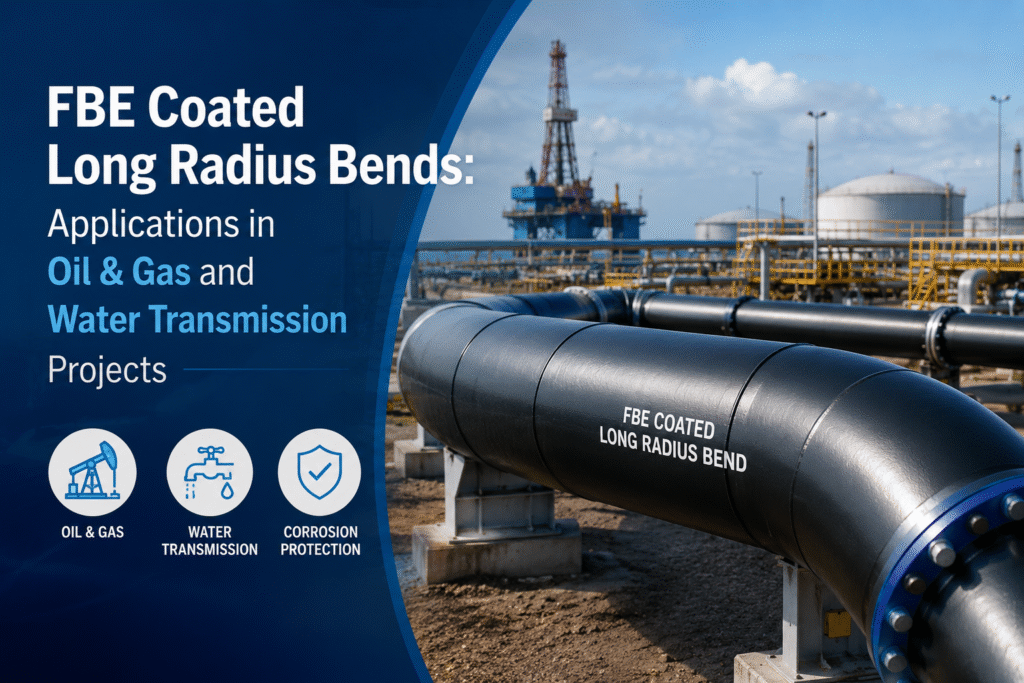
High pressure, corrosive surroundings, temperature swings, and difficult topography are just a few of the harsh working conditions that pipeline systems used in oil and gas extraction, water transfer, and industrial infrastructure must deal with. Every pipeline component needs to be built with durability and efficiency in mind to guarantee dependable flow and long-term performance.
Among these crucial elements, long radius bends are crucial for altering the flow’s direction while lowering pressure losses and the pipeline system’s stress. These bends are perfect for buried, submerged, and exposed pipeline applications because they provide improved protection against corrosion and mechanical damage when paired with Fusion Bonded Epoxy (FBE) coating.
This article explores the benefits of FBE coated long radius bends and their key applications in oil and gas and water transmission projects.
What Are Long Radius Bends?
Pipe fittings called long radius bends are made to alter a pipeline’s direction without affecting its smooth flow characteristics. Although bigger radius, such as 3D, 5D, and 10D bends, are frequently employed in pipeline projects, the centerline radius of a long radius bend is usually 1.5 times or greater than the nominal pipe diameter.
Compared to short radius bends, long radius bends offer several advantages:
Lower pressure drop
Reduced turbulence
Improved flow efficiency
Lower risk of erosion
Reduced stress concentration
Better pigging compatibility
These benefits make long radius bends particularly suitable for high-volume and long-distance pipeline systems.
What Is FBE Coating?
Fusion Bonded Epoxy (FBE) is a thermosetting powder coating applied to steel surfaces to protect against corrosion and environmental degradation.
The coating process typically involves:
Abrasive blasting to clean and prepare the steel surface
Heating the bend to a specified temperature
Applying epoxy powder electrostatically
Curing the coating to create a durable protective layer
Once cured, FBE forms a continuous coating that bonds directly to the metal surface, providing excellent adhesion and long-term corrosion resistance.
Benefits of FBE Coated Long Radius Bends
Superior Corrosion Resistance
Corrosion is one of the leading causes of pipeline failure. FBE coatings create a barrier that prevents moisture, oxygen, salts, and chemicals from reaching the steel substrate.
This protection helps reduce:
External corrosion
Pitting corrosion
Under-film corrosion
Soil-induced corrosion
As a result, pipeline operators can significantly extend the service life of critical piping components.
Enhanced Mechanical Protection
Long radius bends often experience additional stresses during transportation, installation, and operation.
FBE coatings provide protection against:
Impact damage
Abrasion during backfilling
Soil movement
Scratches and handling damage
This added durability helps maintain coating integrity in harsh environments.
Improved Flow Efficiency
The smooth geometry of long radius bends minimizes flow disturbances and pressure losses.
Key operational benefits include:
Reduced energy consumption
Lower pumping costs
Improved flow capacity
Reduced wear caused by turbulence
These advantages are particularly valuable in long-distance transmission pipelines.
Compatibility with Cathodic Protection Systems
In underground and undersea pipelines, cathodic protection systems are frequently utilized in conjunction with FBE coatings.
The primary corrosion barrier is the coating, and any exposed regions caused by coating degradation or flaws are protected by cathodic protection.
When combined, these systems offer complete pipeline protection.
Reduced Maintenance Costs
By minimizing corrosion-related failures and extending asset life, FBE coated long radius bends help reduce:
Inspection requirements
Repair costs
Replacement frequency
Operational downtime
This contributes to lower overall lifecycle costs for pipeline projects.
Applications in Oil and Gas Projects
Oil and gas pipelines operate in some of the world’s most demanding environments, including offshore platforms, deserts, mountainous regions, and subsea installations.
FBE coated long radius bends are widely used in the following applications:
Crude Oil Transmission Pipelines
Long-distance crude oil pipelines require smooth flow characteristics to maximize efficiency and reduce pressure losses.
FBE coated bends provide reliable corrosion protection for buried and above-ground pipeline systems.
Natural Gas Pipelines
Natural gas transmission systems often operate at high pressures and cover vast distances.
Long radius bends help maintain flow efficiency while FBE coatings protect against external corrosion and environmental exposure.
Offshore and Subsea Pipelines
Marine environments present unique challenges due to saltwater exposure, high humidity, and mechanical stress.
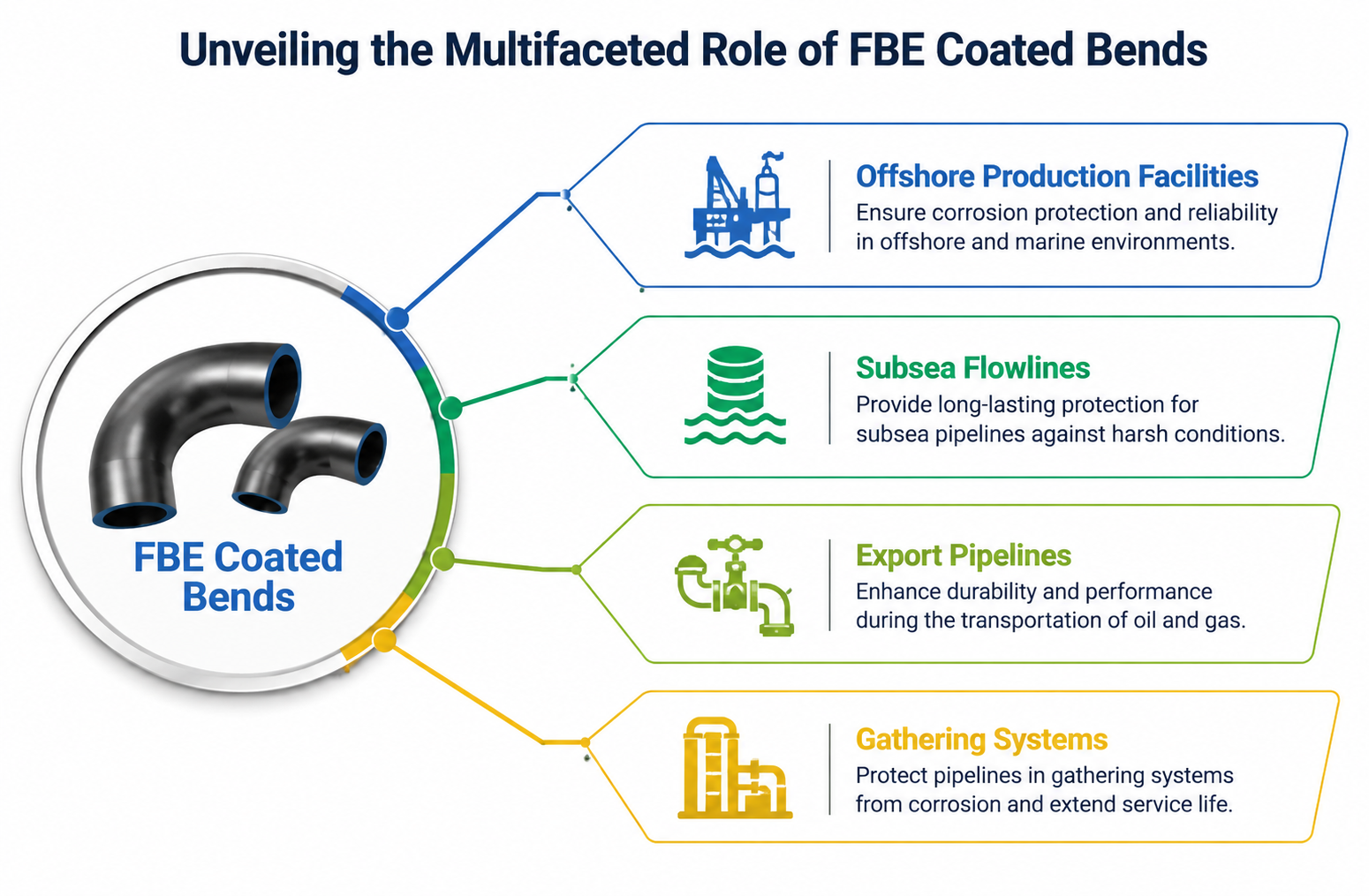
FBE coated bends are commonly used in:
Offshore production facilities
Subsea flowlines
Export pipelines
Gathering systems
Their corrosion resistance helps ensure long-term reliability in aggressive environments.
Refinery and Petrochemical Facilities
Refineries and petrochemical plants often use process pipelines to move corrosive fluids at different pressures and temperatures.
FBE coated bends preserve operational effectiveness while shielding piping systems from external deterioration.
Applications in Water Transmission Projects
Water infrastructure projects require durable pipeline components capable of delivering reliable performance over extended service periods.
FBE coated long radius bends are widely used in:
Municipal Water Supply Networks
Water transmission pipelines must withstand varying soil conditions and prolonged moisture exposure.
FBE coatings protect the external surface of bends from corrosion, helping extend infrastructure lifespan.
Desalination Plants
Desalination facilities process highly corrosive seawater, creating demanding operating conditions.
FBE coated bends provide excellent protection in:
Intake pipelines
Distribution systems
Treated water transmission lines
Irrigation Systems
Large-scale irrigation networks often involve long pipeline routes that require directional changes across uneven terrain.
Long radius bends help maintain efficient flow while FBE coatings protect against soil-related corrosion.
Wastewater Treatment Facilities
Wastewater pipelines are exposed to aggressive chemicals and high moisture levels.
FBE coated bends enhance system reliability and reduce maintenance requirements in these challenging environments.
Key Selection Considerations
When selecting FBE coated long radius bends for a project, engineers should evaluate:
Operating pressure and temperature
Pipeline diameter
Bend radius requirements
Soil conditions
Corrosive exposure levels
Installation environment
Applicable industry standards and specifications
Proper coating thickness, surface preparation, and quality control are essential to achieving optimal long-term performance.
Related Reports
Inconel vs Hastelloy Fittings: Which High Nickel Alloy is Right for Your Project?
What Is Fusion Bonded Epoxy (FBE) Coating? Benefits for Oil & Gas Pipelines & Fittings
What Is Inconel Used For in Oil and Gas? Grades, Properties & Applications
Types of Stainless Steel Fittings: SS 310, 904L, 317L & When to Use Them
Conclusion
FBE coated large radius bends combine the long-term protection of cutting-edge corrosion-resistant coatings with the hydraulic benefits of smooth directional shifts.
They are crucial to oil and gas and water transmission projects because of their capacity to lower pressure losses, increase flow efficiency, and endure challenging environmental conditions.
FBE coated long radius bends provide long-lasting value throughout the lifecycle of vital infrastructure assets by enhancing pipeline reliability, lowering maintenance costs, and extending service life in buried pipelines, offshore installations, municipal water networks, and industrial facilities.
How We Support You
Selecting the right FBE coated long radius bends is essential for maintaining pipeline integrity, minimizing pressure loss, and ensuring long-term corrosion protection in demanding oil & gas and water transmission applications.
Our team helps you choose the most suitable Fusion Bonded Epoxy (FBE) coated long radius bends based on pipeline operating conditions, flow requirements, environmental exposure, coating specifications, and project standards.
Our Support Includes:
Expert guidance in selecting the appropriate bend radius, coating thickness, and material grade for your application
Recommendations for oil & gas transmission pipelines, water distribution networks, desalination plants, and industrial infrastructure projects
Technical support for protection against external corrosion, moisture ingress, soil chemicals, abrasion, and cathodic disbondment
Assistance with compliance to ASTM, ASME, API, ISO, AWWA, and project-specific standards
Guidance on selecting 3D, 5D, and custom long radius bends for optimal flow efficiency and reduced pressure drop
Support with coating inspection reports, quality documentation, and material test certificates (MTCs)
Recommendations for buried, submerged, offshore, and high-humidity environments
Custom solutions for bend angles, diameters, wall thicknesses, pressure ratings, and coating requirements
Fast quotations and dependable bulk supply support for projects across the oil & gas, water treatment, petrochemical, and infrastructure sectors
Whether your project involves cross-country pipelines, offshore facilities, pumping stations, water transmission systems, refinery infrastructure, or industrial processing plants, we provide reliable FBE coated long radius bend solutions designed to extend service life, reduce maintenance costs, and ensure efficient flow performance in harsh operating environments.