
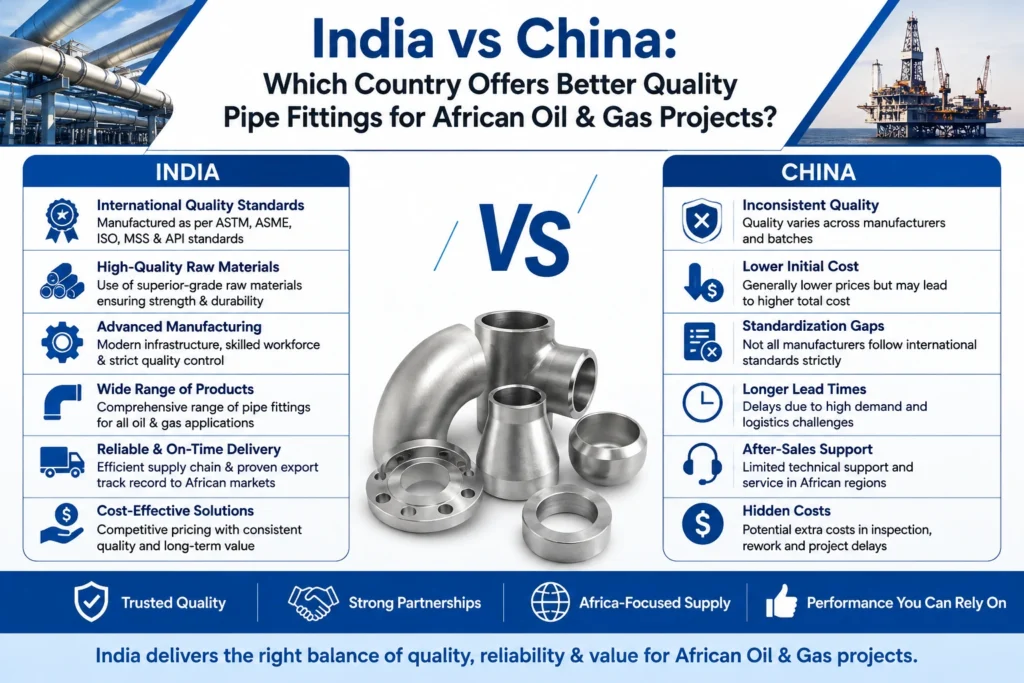
Pipe fittings that can endure high pressure, temperature fluctuations, corrosive fluids, and harsh working conditions are necessary for oil and gas projects in Africa. The quality of elbows, tees, reducers, caps, flanges, and forged fittings can have a direct impact on project safety and long-term dependability in everything from upstream production facilities and refineries to gas transmission pipelines and offshore developments.
China and India are two important manufacturing and export locations for these goods. Manufacturers in both nations are able to produce fittings in accordance with international standards such as ASTM, ASME, API, and EN.
Why Quality Matters in African Oil & Gas Projects
Oil and gas piping systems can operate under extremely demanding conditions. A defective or incorrectly specified fitting can result in:
Leakage
Pressure failure
Corrosion
Welding problems
Production shutdowns
Safety incidents
Expensive repairs
Project delays
Remote installation sites and difficult logistics may also be a part of African projects. It can be far more costly to replace a malfunctioning fitting after installation than to buy an appropriately certified part up front.
Because of this, procurement teams should consider lifetime reliability and technical compliance in addition to buy price when evaluating vendors.
India as a Pipe Fitting Manufacturing Hub
India has a well-established engineering and metal-processing industry serving oil and gas, petrochemical, power, offshore, chemical, and infrastructure projects.
Indian manufacturers and exporters produce products such as:
Carbon steel fittings
Alloy steel fittings
Stainless steel fittings
Duplex fittings
Super duplex fittings
Nickel alloy fittings
Forged fittings
Pipe flanges
Large-diameter bends
Indian producers frequently provide goods that meet international standards like ASME, ASTM, MSS, DIN, EN, and others. Additionally, some providers offer full material traceability and NACE-compliant solutions for sour-service applications.
Additionally, India has a great deal of experience providing plumbing components for global EPC projects.
China as a Pipe Fitting Manufacturing Hub
China has one of the world’s largest manufacturing bases for steel pipes, fittings, flanges, valves, and related industrial products.
Chinese manufacturers offer:
Carbon steel fittings
Alloy steel fittings
Stainless steel fittings
Duplex and super duplex components
Forged fittings
Flanges
Large-diameter fittings
Customized components
In addition to using Chinese standards for particular purposes, Chinese manufacturers can produce goods in accordance with international standards like ASTM, ASME, and EN.
China’s manufacturing ecosystem’s huge production capacity and wide supplier base are its main advantages.
India vs China: Quality Comparison
Factor | India | China |
Manufacturing Capacity | High | Very High |
International Standards | Excellent availability | Excellent availability |
ASTM/ASME Products | Widely available | Widely available |
Oil & Gas Experience | Strong | Strong |
Custom Manufacturing | Strong | Very Strong |
Large-Volume Production | Strong | Excellent |
Material Traceability | Manufacturer-dependent | Manufacturer-dependent |
Third-Party Inspection | Widely available | Widely available |
Export Experience | Strong | Very Strong |
Price Competitiveness | Competitive | Often highly competitive |
Supplier Selection Importance | Very High | Very High |
The comparison demonstrates how a straightforward “India vs. China” quality ranking can be deceptive. High-quality oil and gas fittings can be produced by manufacturers in both nations.
ASTM and ASME Compliance
For African oil and gas projects, international standards are often more important than the country where the component was manufactured.
For example, butt-weld fittings may be specified according to:
ASTM A234
ASTM A420
ASTM A403
ASTM A815
ASTM A860
Dimensional requirements may include:
ASME B16.9
ASME B16.11
ASME B16.5
ASME B16.47
MSS specifications
Project-specific requirements may also include API, NACE, ISO, EN, or client standards.
The buyer should always ensure that the manufacturer is supplying the exact grade and specification required by the project.
Material Traceability
One of the most important factors when selecting an overseas supplier is traceability.
A reliable manufacturer should be able to connect the finished fitting to its original raw material heat.
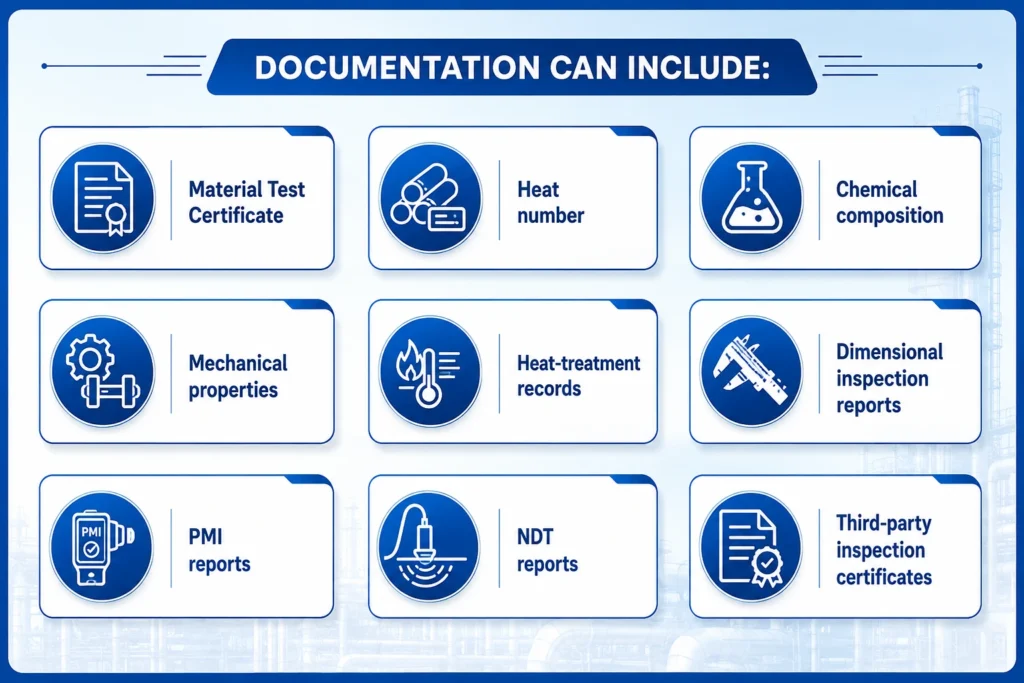
Documentation can include:
Material Test Certificate
Heat number
Chemical composition
Mechanical properties
Heat-treatment records
Dimensional inspection reports
PMI reports
NDT reports
Third-party inspection certificates
The key is to verify the documentation rather than simply assuming that it is accurate.
Third-Party Inspection
For critical African oil and gas projects, third-party inspection can provide an additional layer of confidence.
Depending on project requirements, inspection agencies may verify:
Raw material
Dimensions
Chemical composition
Heat treatment
Mechanical properties
Welding
NDT
Surface condition
Marking
Documentation
Inspection may be performed by an approved independent inspection agency.
The buyer should specify inspection requirements clearly before production begins.
Manufacturing Quality
Manufacturing quality depends heavily on the individual factory.
Important factors include:
Forging equipment
Heat-treatment furnaces
CNC machining
Forming equipment
Welding controls
Calibration systems
Inspection laboratories
NDT facilities
Significantly better fittings might be produced by a highly skilled firm in China or India than by an inexperienced supplier who offers a competitive price.
Therefore, where project risk warrants it, procurement teams should appoint an independent inspection agency or carry out supplier audits.
Price vs Quality
Because of its massive industrial environment and output quantities, China frequently offers very competitive prices.
Additionally, India can provide reasonable prices, especially for smaller or medium-sized project orders, designed fittings, forged components, and specific alloys.
Comparing quotes only based on unit cost, however, may be deceptive.
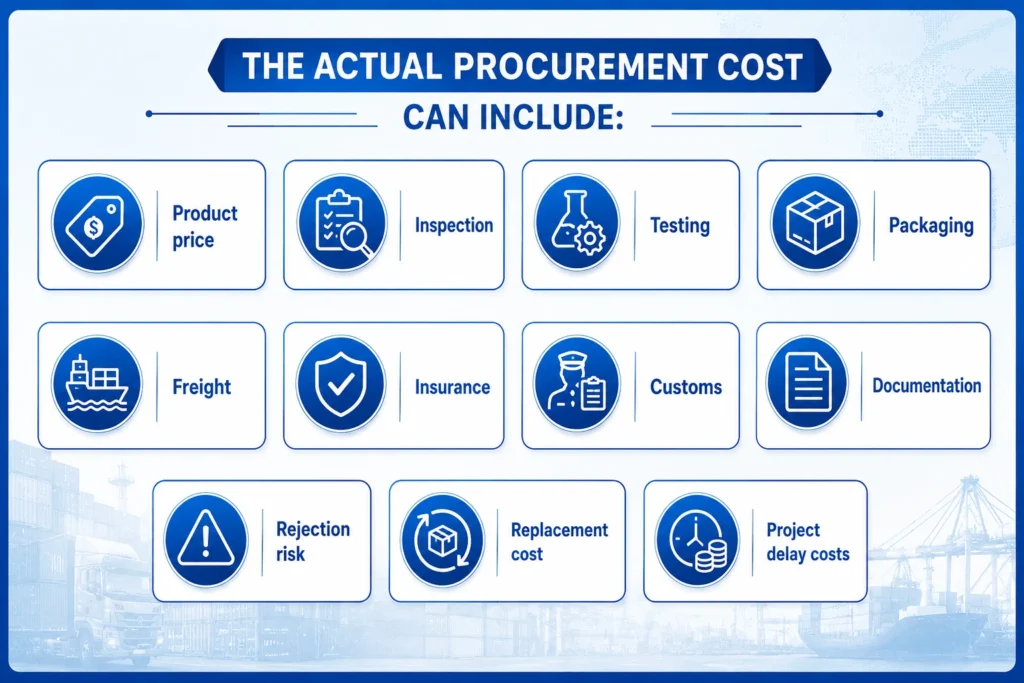
The actual procurement cost can include:
Product price
Inspection
Testing
Packaging
Freight
Insurance
Customs
Documentation
Rejection risk
Replacement cost
Project delay costs
A cheaper fitting that fails inspection can ultimately cost much more than a slightly more expensive fitting supplied correctly the first time.
Availability of Special Materials
African oil and gas projects may require specialized materials depending on service conditions.
These can include:
ASTM A234 WPB
ASTM A420 WPL6
ASTM A403 WP316L
ASTM A815 UNS S32205
ASTM A815 UNS S32750
ASTM A815 UNS S32760
ASTM A860 WPHY grades
Nickel alloys
Low-temperature carbon steels
Both India and China have manufacturers capable of supplying a wide range of these materials.
For corrosion-critical applications, buyers should pay particular attention to heat treatment, chemical composition, ferrite balance for duplex materials, PMI, and corrosion testing where specified.
Delivery and Logistics to Africa
Logistics can have a major impact on procurement decisions.
African projects may require delivery to ports or inland destinations in countries such as:
Nigeria
Angola
Ghana
Egypt
Algeria
Mozambique
Tanzania
South Africa
Kenya
Both India and China have extensive international shipping networks.
Therefore, the supplier with the shortest production lead time may not always be the best. The entire supply chain, including manufacturing, inspection, packing, shipping, customs paperwork, and final delivery, should be assessed by procurement teams.
Which Country Is Better for African Projects?
India May Be the Better Choice When:
Specialized alloy fittings are required
Strong technical communication is important
Customized or engineered components are needed
Detailed documentation and traceability are priorities
The project requires close coordination with an EPC contractor
Smaller or medium-sized batches are involved
Indian manufacturers have significant experience with international oil and gas standards and export-oriented project supply.
China May Be the Better Choice When:
Very large quantities are required
High production capacity is important
Standardized fittings are being purchased
Competitive pricing is a major consideration
Large-diameter or customized production is required
Multiple manufacturing options are needed
China’s large industrial manufacturing base can provide significant advantages for high-volume requirements.
What African EPC Contractors Should Check
Regardless of whether the supplier is from India or China, buyers should request:
Company quality certifications
Relevant product standards
Material Test Certificates
Heat-number traceability
Manufacturing process details
Heat-treatment records
Dimensional inspection reports
NDT reports
PMI reports where required
Third-party inspection options
Previous export references
Project-specific quality assurance plan
Inspection and Test Plan
Proper product marking
Export packaging and documentation
A supplier that cannot provide clear answers to these requirements should be evaluated carefully.
Related Reports
Inconel vs Hastelloy Fittings: Which High Nickel Alloy is Right for Your Project?
What Is Fusion Bonded Epoxy (FBE) Coating? Benefits for Oil & Gas Pipelines & Fittings
What Is Inconel Used For in Oil and Gas? Grades, Properties & Applications
Types of Stainless Steel Fittings: SS 310, 904L, 317L & When to Use Them
Conclusion
For African oil and gas projects, both China and India are competent producers of premium pipe fittings. The best option is determined more by the manufacturer’s technical know-how, quality-control systems, certifications, paperwork, delivery performance, and overall lifespan cost than by the nation of origin.
China might provide benefits in high-volume and cost-sensitive procurement, whereas India might be a good option for specialized and documentation-intensive projects. Prequalifying suppliers, confirming certifications and MTCs, auditing manufacturing capabilities, and doing third-party inspections for important orders are ultimately the best strategies. The chosen supplier should be the one who consistently satisfies the technical, quality, delivery, and cost requirements of the project.
How We Support You
Selecting the right pipe fittings supplier is essential for ensuring consistent quality, reliable delivery, cost efficiency, and long-term performance in African oil & gas projects. Whether you are comparing Indian and Chinese manufacturers, our team helps you evaluate suppliers based on material quality, manufacturing capabilities, certifications, inspection requirements, delivery timelines, and project specifications.
Our Support Includes:
Expert guidance when comparing Indian and Chinese pipe fitting manufacturers for African oil & gas projects
Recommendations based on material grade, manufacturing process, quality requirements, project standards, and service conditions
Support for sourcing carbon steel, stainless steel, duplex, super duplex, alloy steel, and nickel alloy fittings
Guidance on selecting elbows, tees, reducers, caps, bends, stub ends, flanges, and custom-fabricated piping components
Assistance with compliance to ASTM, ASME, ANSI, API, ISO, NACE, EN, and project-specific standards
Support with verifying Material Test Certificates (MTCs), PMI reports, heat treatment records, dimensional inspection, NDT, and third-party inspection
Recommendations based on supplier quality systems, traceability, manufacturing capacity, inspection procedures, and export experience
Assistance with evaluating pricing, minimum order quantities, production schedules, packaging, logistics, and delivery requirements
Custom solutions for sizes, wall thicknesses, pressure classes, material grades, coatings, and project-specific specifications
Fast quotations and dependable bulk supply support for projects across Nigeria, Angola, Egypt, Ghana, Kenya, Tanzania, South Africa, and other African markets
Whether your project involves oil & gas pipelines, offshore platforms, refineries, petrochemical plants, LNG facilities, power generation, or water infrastructure, we provide reliable pipe fitting and flange solutions with a strong focus on quality, international standards, documentation, and dependable project delivery.