
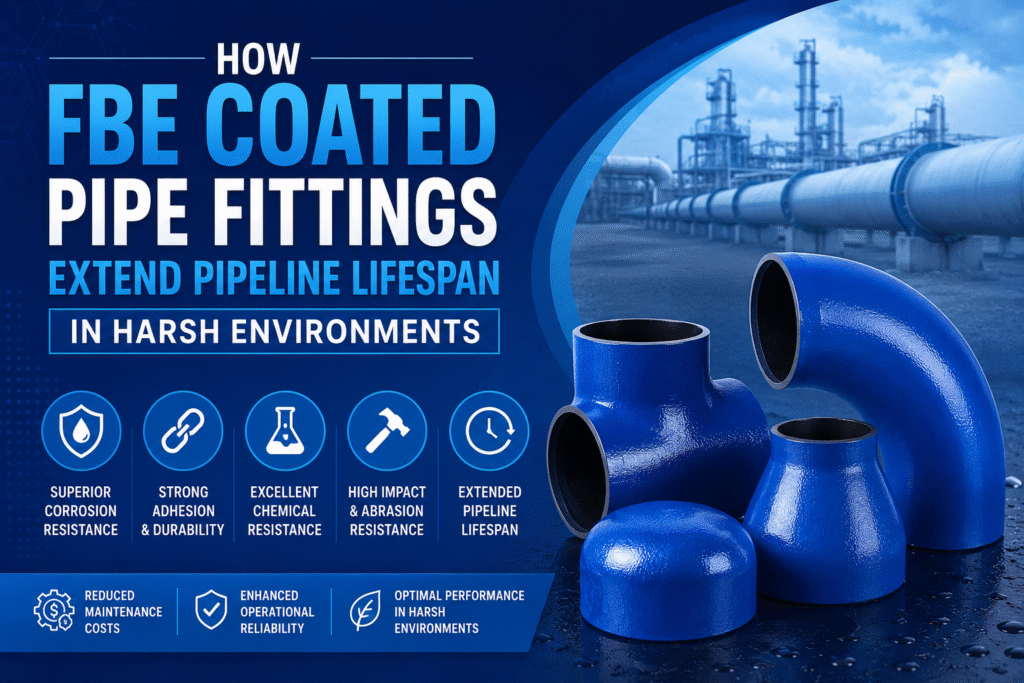
In a variety of industries, including mining, oil and gas, petrochemicals, water treatment, power production, and desalination, pipelines are essential infrastructure assets. These systems frequently function in some of the most difficult conditions on earth, where exposure to chemicals, moisture, high temperatures, and abrasive materials can hasten corrosion and drastically shorten service life.
One of the biggest causes of pipeline failures in the globe is still corrosion, which leads to expensive repairs, unscheduled downtime, hazards to the environment, and safety issues. Pipeline operators are depending more and more on cutting-edge protective coatings that increase longevity and lower lifetime costs to address these issues. Fusion Bonded Epoxy (FBE) coated pipe fittings are now one of the best options.
Fittings coated with FBE offer a strong, long-lasting barrier that shields metal surfaces from mechanical damage and corrosive substances. FBE coatings assist prolong the life of whole pipeline systems, even under challenging operating conditions, by improving the performance of crucial parts including elbows, tees, reducers, bends, and flanges.
What Are FBE Coated Pipe Fittings?
Fusion Bonded Epoxy (FBE) is a thermosetting powder coating applied to the external or internal surfaces of pipe fittings through a controlled heat-curing process.
The application process typically involves four key stages:
Surface preparation: The fitting surface is cleaned and abrasive blasted to remove rust, scale, oil, and contaminants while creating a suitable surface profile for adhesion.
Preheating: The fitting is heated to a specified temperature, usually between 180°C and 250°C.
Electrostatic powder application: Epoxy powder is sprayed onto the heated surface, where it melts instantly and adheres to the metal.
Curing: The coating chemically cross-links and hardens to form a continuous, durable protective layer.
Unlike conventional paints, FBE creates a strong chemical bond with the metal substrate, resulting in excellent adhesion and long-term performance.
Why Harsh Environments Accelerate Pipeline Degradation
Pipeline systems installed in demanding environments face multiple factors that contribute to corrosion and material degradation. These include:
High humidity and continuous moisture exposure
Saline and marine environments
Acidic or alkaline soils
Corrosive chemicals and process fluids
Abrasive particles and slurry transportation
Temperature fluctuations and thermal cycling
Mechanical impacts during installation and operation
Microbial activity in soil and water
Without adequate protection, these conditions can cause pitting, cracking, wall thinning, leaks, and premature equipment failure.
Pipe fittings are particularly vulnerable because they often experience changes in flow direction, turbulence, pressure variations, and higher mechanical stress compared to straight pipe sections.
How FBE Coated Pipe Fittings Extend Pipeline Lifespan
Superior Corrosion Protection
The primary benefit of FBE coating is its ability to prevent corrosion. The cured epoxy layer forms a continuous barrier that isolates the metal surface from water, oxygen, salts, and chemicals.
By preventing direct contact between the steel substrate and corrosive elements, FBE coatings help reduce:
Uniform corrosion
Pitting corrosion
Crevice corrosion
Under-deposit corrosion
This protection significantly extends the operational life of pipeline fittings and minimizes the risk of failures.
Excellent Adhesion Strength
The remarkable adherence of FBE coatings to the metal surface is one of the main factors contributing to their long-term efficacy.
The epoxy and substrate form a chemical connection during the curing process, resulting in a long-lasting covering that is resistant to peeling, flaking, and delamination. In underground and underwater applications, where coating failure can rapidly result in corrosion, strong adherence is especially crucial.
Throughout the pipeline’s operational life, consistent protection is ensured by the coating’s resilience to changing environmental conditions.
Resistance to Chemicals and Moisture
Many industrial pipelines transport aggressive fluids or operate in chemically challenging environments. FBE coatings provide excellent resistance to a wide range of substances, including:
Acids
Alkalis
Salts
Hydrocarbons
Wastewater contaminants
The coating also exhibits low water permeability, which helps prevent moisture penetration and reduces the risk of corrosion beneath the coating layer.
This makes FBE-coated fittings an ideal choice for chemical processing plants, refineries, desalination facilities, and wastewater treatment systems.
Improved Impact and Abrasion Resistance
During transportation, installation, and operation, pipe fittings are exposed to impacts, scratches, and abrasive forces.
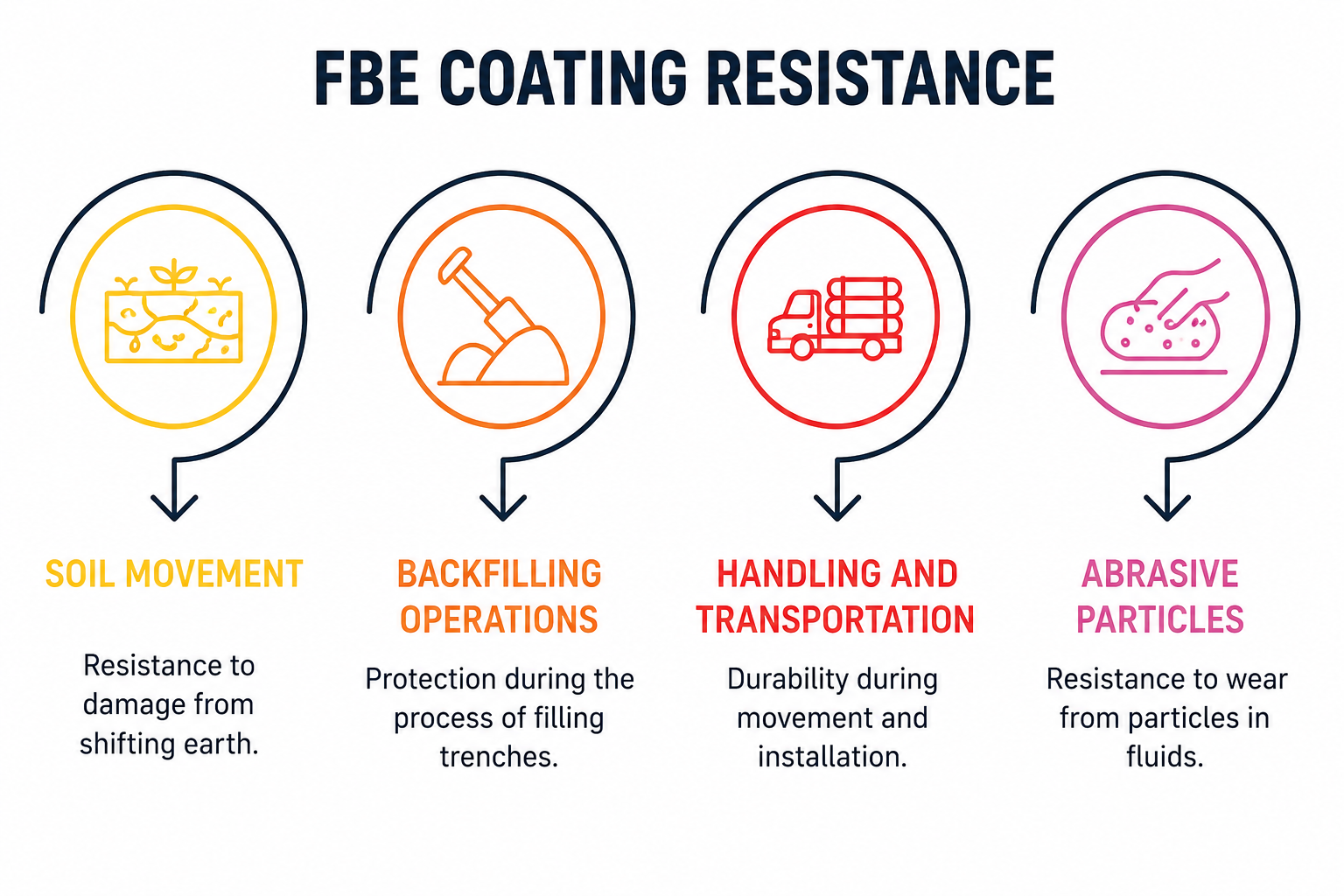
FBE coatings offer enhanced resistance to mechanical damage caused by:
Soil movement
Backfilling operations
Handling and transportation
Abrasive particles in process fluids
Although FBE coatings are not designed for extreme wear applications without additional protective layers, they provide sufficient durability for many standard pipeline environments.
For highly abrasive conditions, FBE can also be combined with multilayer coating systems for additional protection.
Compatibility with Cathodic Protection Systems
Cathodic protection systems, which are frequently utilized in buried and submerged pipelines, are compatible with FBE-coated fittings.
The cathodic protection system protects exposed metal portions brought on by coating flaws or mechanical damage, while the coating serves as the main defense against corrosive substances.
This integrated strategy prolongs the service life of pipeline infrastructure and dramatically lowers corrosion rates.
Reduced Maintenance and Lifecycle Costs
Pipeline maintenance and repair activities can be expensive and disruptive. Corrosion-related failures often require shutdowns, inspections, excavation, and component replacement.
By minimizing corrosion and reducing coating degradation, FBE-coated fittings help operators lower:
Inspection frequency
Repair costs
Replacement expenses
Downtime and production losses
Although FBE-coated fittings may involve a higher initial investment than uncoated alternatives, the long-term savings achieved through reduced maintenance and extended service life typically outweigh the upfront costs.
Common Applications of FBE Coated Pipe Fittings
FBE-coated fittings are widely used across industries where corrosion protection is essential, including:
Oil and gas transmission pipelines
Offshore and subsea systems
Water distribution networks
Desalination plants
Petrochemical facilities
Mining and slurry pipelines
Power generation plants
Wastewater treatment systems
These industries rely on FBE coatings to improve operational reliability and protect critical assets in demanding environments.
Related Reports
Inconel vs Hastelloy Fittings: Which High Nickel Alloy is Right for Your Project?
What Is Fusion Bonded Epoxy (FBE) Coating? Benefits for Oil & Gas Pipelines & Fittings
What Is Inconel Used For in Oil and Gas? Grades, Properties & Applications
Types of Stainless Steel Fittings: SS 310, 904L, 317L & When to Use Them
Conclusion
If appropriate corrosion prevention measures are not put in place, harsh operating conditions can drastically lower pipeline performance and raise maintenance costs. FBE coated pipe fittings offer exceptional resistance to corrosion, moisture, chemicals, and mechanical damage, making them a tried-and-true and affordable way to increase the longevity of pipelines.
They are a crucial part of contemporary pipeline infrastructure because of their robust adhesion, compatibility with cathodic protection systems, and resilience in harsh conditions.
FBE-coated pipe fittings are a wise and sustainable investment for businesses looking to increase asset durability, enhance operational dependability, and lower overall lifecycle costs.
How We Support You
Selecting the right FBE coated pipe fittings is essential for maximizing pipeline lifespan, minimizing maintenance costs, and ensuring long-term performance in harsh operating environments.
Our team helps you choose the most suitable Fusion Bonded Epoxy (FBE) coated fittings based on factors such as soil conditions, moisture levels, operating temperatures, chemical exposure, pipeline pressure, and project specifications.
Our Support Includes:
Expert guidance in selecting the appropriate FBE coating thickness, specifications, and performance requirements
Recommendations for applications in oil and gas pipelines, water transmission networks, chemical processing facilities, and infrastructure projects
Technical support for protection against corrosion, moisture ingress, soil chemicals, abrasion, and cathodic disbondment
Assistance with compliance to ASTM, ASME, API, ISO, AWWA, and project-specific standards
Guidance on selecting FBE coated elbows, tees, reducers, flanges, bends, and other pipeline components
Support with coating inspection reports, quality documentation, and material test certificates (MTCs)
Recommendations for buried, submerged, offshore, and high-humidity environments
Custom solutions for coating thicknesses, fitting sizes, pressure ratings, and project-specific requirements
Fast quotations and reliable bulk supply support for projects across the oil & gas, water treatment, petrochemical, and infrastructure sectors
Whether your project involves cross-country pipelines, offshore facilities, underground distribution networks, desalination plants, or industrial processing systems, we provide dependable FBE coated pipe fitting solutions designed to enhance corrosion protection, extend service life, and ensure reliable pipeline performance in demanding environments.