
Introduction
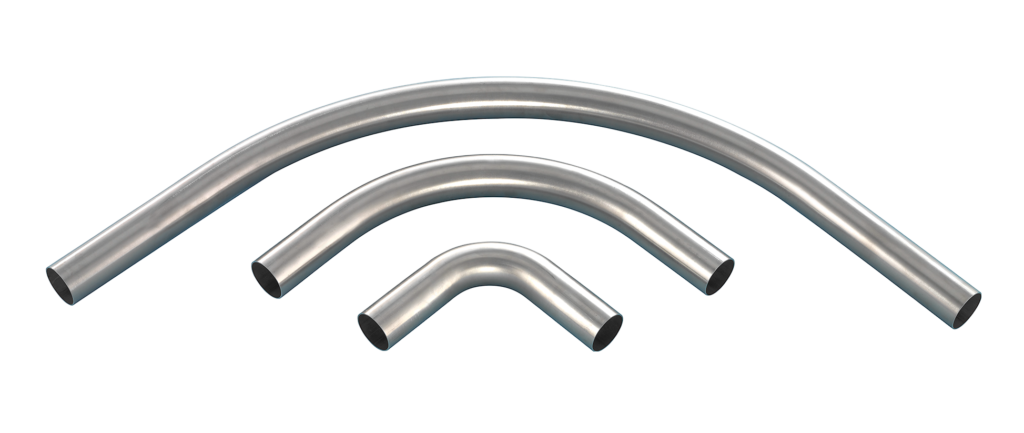
In piping systems, bends are essential for changing flow direction while maintaining system efficiency. Choosing between long radius bends vs short radius bends plays a critical role in determining pressure drop, flow performance, and installation feasibility.
For procurement engineers and project designers, understanding these differences helps ensure optimal system design, cost control, and long-term reliability. This guide explains the definitions, differences, standards, applications, and selection criteria for both bend types.
What Is a Long Radius Bend?
A long radius (LR) bend is a pipe bend where the centerline radius is 1.5 times the pipe diameter (1.5D).
Key Features
Smooth flow with minimal turbulence
Lower pressure drop
Reduced wear and tear
Requires more installation space
Advantages
Improved flow efficiency
Lower energy loss
Longer service life
What Is a Short Radius Bend?
A short radius (SR) bend has a centerline radius equal to the pipe diameter (1D).
Key Features
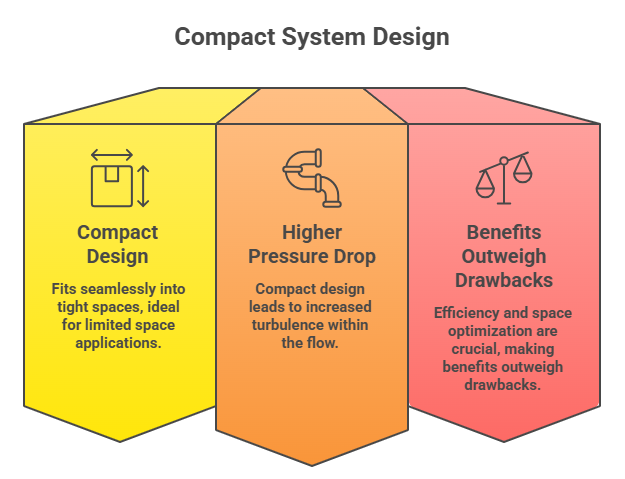
Compact design
Higher pressure drop
Increased turbulence
Suitable for tight spaces
Advantages
Space-saving design
Lower initial cost
Easier installation in confined areas
Long Radius vs Short Radius Bends: Key Differences
1. Radius
Long radius → 1.5D
Short radius → 1D
2. Flow Efficiency
Long radius → Smooth flow
Short radius → Higher turbulence
Best for flow: Long Radius Bend
3. Pressure Drop
Long radius → Low
Short radius → High
4. Space Requirement
Long radius → Requires more space
Short radius → Ideal for tight layouts
5. Wear and Tear
Long radius → Less erosion
Short radius → Higher erosion risk
6. Cost Comparison
Long radius → Slightly higher cost
Short radius → More economical
7. Applications
Long radius → High-flow systems
Short radius → Compact piping systems
Standards for Pipe Bends
Standards ensure quality, safety, and compatibility in piping systems.
Common Standards
ASME B16.9 – Factory-made wrought buttweld fittings
ASME B16.28 – Short radius elbows and returns
ASTM Standards – Material specifications
Why Standards Matter
Ensure dimensional accuracy
Maintain safety and reliability
Enable global compatibility
Applications of Long Radius and Short Radius Bends
Long Radius Bend Applications
Oil and gas pipelines
Power plants
Chemical processing systems
High-velocity fluid transport
Short Radius Bend Applications
Compact industrial systems
HVAC piping
Fire protection systems
Tight installation spaces
How to Choose Between Long Radius and Short Radius Bends
Step-by-Step Selection Guide
Evaluate Space Availability
Limited space → Short radius
Ample space → Long radius
Check Flow Requirements
High flow efficiency → Long radius
Moderate flow → Short radius
Analyze Pressure Drop
Critical → Long radius
Acceptable → Short radius
Consider Maintenance Needs
Low maintenance → Long radius
Occasional maintenance → Short radius
Assess Budget Constraints
Cost-sensitive → Short radius
Performance-focused → Long radius
People Also Ask
What is the difference between long radius and short radius bends?
The main difference is the radius: long radius bends are 1.5D, while short radius bends are 1D.
Which bend is better for flow efficiency?
Long radius bends provide better flow efficiency due to reduced turbulence.
Where are short radius bends used?
They are used in compact systems where space is limited.
Do long radius bends reduce pressure loss?
Yes, they significantly reduce pressure drop compared to short radius bends.
Which bend is more cost-effective?
Short radius bends are generally more economical.
Real-World Example
Example Scenario
Project: Industrial fluid pipeline
Requirement: Smooth flow and low pressure loss
Solution: Long radius bends
Result: Improved efficiency and reduced energy consumption
Conclusion
Understanding the differences between long radius bends vs short radius bends is essential for designing efficient piping systems.
Final Takeaways
Long radius bends → Best for flow efficiency and durability
Short radius bends → Best for compact and cost-sensitive systems
Selection depends on space, performance, and budget
Procurement Insight
Choosing the right bend type ensures optimal performance, reduced operational costs, and long-term system reliability.
Related Reports
Inconel vs Hastelloy Fittings: Which High Nickel Alloy is Right for Your Project?
What Is Fusion Bonded Epoxy (FBE) Coating? Benefits for Oil & Gas Pipelines & Fittings
What Is Inconel Used For in Oil and Gas? Grades, Properties & Applications
Types of Stainless Steel Fittings: SS 310, 904L, 317L & When to Use Them
How We Support You
- Technical guidance on choosing between long radius and short radius bends
- Support for pipeline design based on flow efficiency, pressure drop and space limitations
- Assistance in selecting suitable bend standards, dimensions and wall thickness
- Material recommendations for carbon steel, stainless steel, alloy steel and special grades
- Custom manufacturing support for industrial piping bends as per project drawings
- Supply of pipe bends, elbows, fittings, flanges and fabricated piping components
Email us: info@trinityalloy.com
Connect with us on WhatsApp for quick assistance