
What Is Fusion Bonded Epoxy (FBE) Coating?
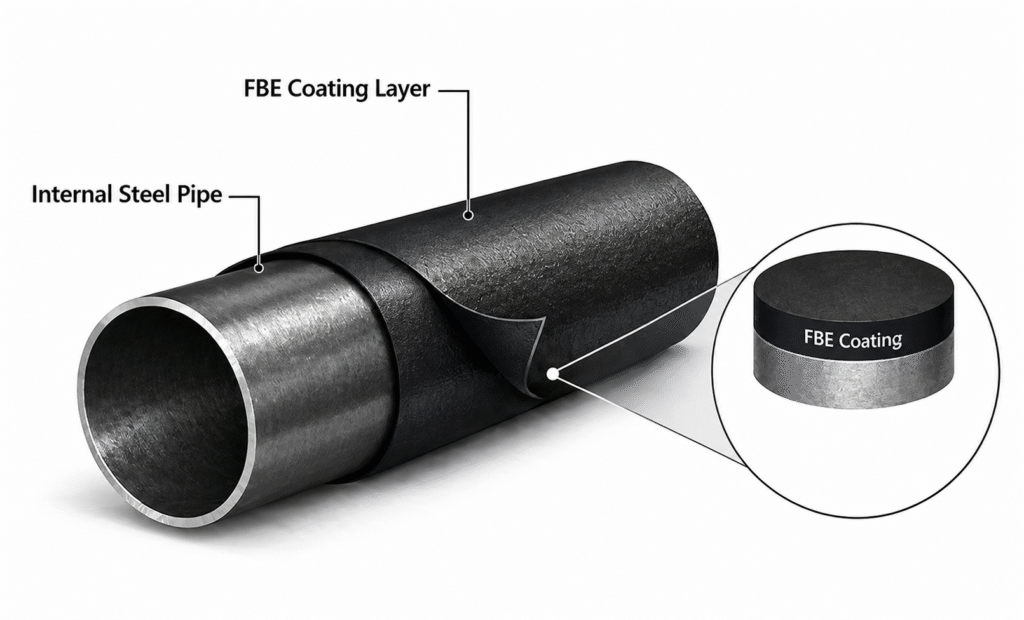
Fusion Bonded Epoxy (FBE) coating is a thermosetting powder coating widely used to protect steel surfaces, especially in the oil and gas industry. It is applied to pipelines, fittings, and flanges to provide excellent corrosion resistance, strong adhesion, and long-term durability.
FBE coating is created by applying epoxy powder to a preheated steel surface. The powder melts, flows, and chemically reacts to form a hard, protective layer that bonds permanently to the metal. This fusion process ensures superior protection compared to traditional liquid coatings.
How Does Fusion Bonded Epoxy Coating Work?
Step-by-Step Process
Surface Preparation
The steel surface is cleaned using abrasive blasting.
Removes rust, oil, and contaminants.
Ensures strong adhesion of FBE coating.
Preheating the Steel
Steel is heated to around 180–250°C.
This temperature allows proper melting of epoxy powder.
Electrostatic Powder Application
Epoxy powder is sprayed using electrostatic guns.
The powder adheres evenly to the hot surface.
Fusion & Curing
Powder melts and forms a uniform film.
Chemical cross-linking creates a durable coating.
Cooling & Inspection
Coated pipe is cooled.
Quality checks ensure thickness and uniformity.
Key Properties of FBE Coating
1. Excellent Corrosion Resistance
FBE coating acts as a barrier that prevents moisture, oxygen, and chemicals from reaching the steel surface. This significantly reduces the risk of corrosion in pipelines.
2. Strong Adhesion
The fusion process creates a chemical bond between the coating and steel, ensuring long-lasting performance.
3. High Impact Resistance
FBE-coated pipes can withstand mechanical stress during transportation and installation.
4. Temperature Resistance
FBE coatings can handle moderate to high temperatures, making them ideal for oil and gas operations.
5. Chemical Resistance
They resist exposure to acids, salts, and hydrocarbons commonly found in industrial environments.
Benefits of FBE Coating for Oil & Gas Pipelines
1. Long-Term Pipeline Protection
FBE coating extends the lifespan of pipelines by protecting them from corrosion and environmental damage.
2. Cost-Effective Solution
Although initial application costs may be higher, FBE coating reduces maintenance and replacement expenses over time.
3. Improved Operational Efficiency
Pipelines with FBE coating experience fewer failures, ensuring smooth oil and gas transportation.
4. Environmental Protection
By preventing leaks and corrosion, FBE coating helps reduce environmental risks and contamination.
5. Reduced Maintenance
Minimal repair and maintenance are required due to the durability of the coating.
Applications of FBE Coating
1. Oil & Gas Pipelines
FBE coating is widely used in both onshore and offshore pipelines to prevent corrosion.
2. Pipeline Fittings
Elbows, tees, reducers, and other fittings are coated with FBE to ensure uniform protection.
3. Water Pipelines
Used in potable and industrial water pipelines for corrosion resistance.
4. Flanges –
FBE coating is widely used on flanges to protect them from corrosion, especially in harsh industrial environments like oil & gas, water treatment, and chemical processing.
Types of Fusion Bonded Epoxy Coatings
1. Standard FBE Coating
Single-layer coating
Used for general corrosion protection
2. Dual-Layer FBE (DLFBE)
Two layers of epoxy coating
Provides enhanced durability and protection
3. Multi-Layer Coating Systems
FBE used as a base layer
Combined with polyethylene or polypropylene top layers
Advantages vs Other Coatings
FBE vs Liquid Coating
FBE provides better adhesion
More uniform thickness
Longer lifespan
FBE vs 3LPE Coating
FBE is simpler and cost-effective
3LPE offers additional mechanical protection
FBE is often used as a base layer in 3LPE systems
Limitations of FBE Coating
1. UV Sensitivity
FBE coating can degrade under prolonged UV exposure unless top-coated.
2. Limited Flexibility
Not suitable for extreme bending applications without additional layers.
3. Surface Preparation Requirement
Requires proper cleaning for effective bonding.
Why FBE Coating Is Essential in Oil & Gas Industry
The oil and gas industry operates in harsh environments where pipelines are exposed to corrosive chemicals, high pressure, and extreme conditions. Fusion Bonded Epoxy coating plays a critical role in:
Preventing pipeline failures
Ensing safe transportation of oil and gas
Reducing operational risks
Enhancing asset lifespan
Best Practices for FBE Coating
1. Proper Surface Preparation
Always ensure blasting meets industry standards.
2. Controlled Application Temperature
Maintain correct heating for proper fusion.
3. Thickness Monitoring
Uniform coating thickness ensures consistent protection.
4. Regular Inspection
Perform quality checks for defects and adhesion.
Conclusion
Fusion Bonded Epoxy (FBE) coating is one of the most reliable and widely used solutions for protecting pipelines and fittings in the oil and gas industry. Its excellent corrosion resistance, strong adhesion, and durability make it a preferred choice for long-term pipeline protection
Related Reports
Inconel vs Hastelloy Fittings: Which High Nickel Alloy is Right for Your Project?
What Is Fusion Bonded Epoxy (FBE) Coating? Benefits for Oil & Gas Pipelines & Fittings
What Is Inconel Used For in Oil and Gas? Grades, Properties & Applications
Types of Stainless Steel Fittings: SS 310, 904L, 317L & When to Use Them
How We Support You:
- ✔ Detailed Guidance on Fusion Bonded Epoxy (FBE) Coating & Its Applications
- ✔ Expert Support on Corrosion Protection in Harsh & Underground Environments
- ✔ Assistance for Oil & Gas, Water & Industrial Pipeline Projects
- ✔ Help in Selecting the Right Coated Pipes & Fittings
- ✔ Material & Coating Recommendations Based on Project Conditions
- ✔ Supply of FBE-Coated Pipes, Flanges, Elbows, Tees & More
📧 Email us: info@trinityalloy.com
📱 Connect with us on WhatsApp for quick assistance