
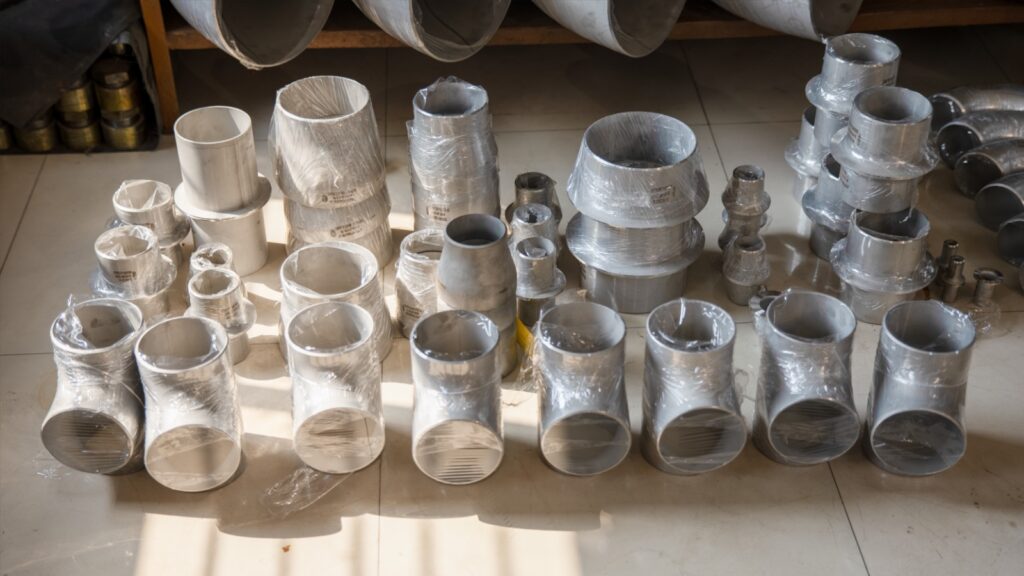
Inconel vs Hastelloy Fittings
When it comes to high-performance nickel alloys, Inconel and Hastelloy are two of the most widely used materials in industries like oil & gas, chemical processing, and power generation. Both offer excellent corrosion resistance and strength, but they are designed for different environments.
Choosing between Inconel vs Hastelloy fittings depends on temperature, corrosion type, and application conditions.
What Are Inconel Fittings?
Overview
Inconel is a nickel-chromium-based alloy known for its ability to withstand extreme temperatures and oxidation.
Key Features
Excellent high-temperature strength
oxidation and scaling
Good corrosion resistance
Performs well in high-pressure environments
Common Grades
Inconel 625
- Inconel 718
Inconel 600
Inconel 825
What Are Hastelloy Fittings?
Overview
Hastelloy is a nickel-molybdenum-based alloy designed primarily for extreme corrosion resistance, especially in chemical environments.
Key Features
Superior resistance to acids and chemicals
Excellent performance in harsh chemical processing
Resistance to pitting and crevice corrosion
Stable in both oxidizing and reducing environments
Common Grades
Hastelloy C276
Hastelloy C22
Hastelloy B2
Key Differences Between Inconel and Hastelloy
1. Temperature Resistance
Inconel: Excellent for high-temperature applications
Hastelloy: Good, but not as strong as Inconel at extreme heat
2. Corrosion Resistance
Inconel: Resistant to oxidation and seawater
Hastelloy: Superior in chemical and acidic environments
3. Composition
Inconel: Nickel + Chromium
Hastelloy: Nickel + Molybdenum
4. Cost
Both are expensive, but Hastelloy can be slightly higher due to its enhanced corrosion resistance
Applications of Inconel Fittings
1. Oil & Gas Industry
Used in offshore pipelines, subsea systems, and high-pressure valves.
2. Power Generation
Ideal for turbines and heat exchangers.
3. Aerospace
Used in jet engines due to high heat resistance.
Applications of Hastelloy Fittings
1. Chemical Processing
Handles aggressive chemicals like acids and solvents.
2. Marine Industry
Performs well in seawater and chloride environments.
3. Pollution Control
Used in scrubbers and emission control systems.
Advantages of Inconel Fittings
1. High Strength at Elevated Temperatures
Maintains structural integrity under heat.
2. Oxidation Resistance
Ideal for extreme environments.
3. Long Service Life
Reduces replacement frequency.
Advantages of Hastelloy Fittings
1. Exceptional Corrosion Resistance
Best for acidic and chemical exposure.
2. Versatility
Works in both oxidizing and reducing conditions.
3. Reliability
Performs well in harsh chemical industries.
Limitations of Each Alloy
Inconel Limitations
Higher cost than stainless steel
Less effective in highly acidic environments
Hastelloy Limitations
Expensive material
Lower high-temperature strength compared to Inconel
How to Choose the Right Alloy for Your Project
Choose Inconel If:
Your application involves high temperatures
You need resistance to oxidation and pressure
Used in oil & gas or aerospace
Choose Hastelloy If:
You are dealing with strong acids or chemicals
Corrosion resistance is the top priority
Used in chemical processing plants
Inconel vs Hastelloy: Quick Comparison Table
Feature | Inconel | Hastelloy |
Base Composition | Nickel-Chromium | Nickel-Molybdenum |
Strength at High Temp | Excellent | Good |
Corrosion Resistance | Very Good | Excellent (especially chemicals) |
Best Use Case | High heat environments | Chemical processing |
Cost | High | Very High |
Conclusion
Both Inconel and Hastelloy fittings are premium materials designed for demanding industrial environments. The choice between Inconel vs Hastelloy ultimately depends on your project requirements.
Choose Inconel for high-temperature and high-pressure environments
Choose Hastelloy for superior corrosion resistance in chemical conditions
Understanding the strengths of each alloy helps ensure better performance, safety, and long-term cost efficiency.
Related Reports
Inconel vs Hastelloy Fittings: Which High Nickel Alloy is Right for Your Project?
What Is Fusion Bonded Epoxy (FBE) Coating? Benefits for Oil & Gas Pipelines & Fittings
What Is Inconel Used For in Oil and Gas? Grades, Properties & Applications
Types of Stainless Steel Fittings: SS 310, 904L, 317L & When to Use Them
How We Support You:
- ✔ Detailed Comparison: Inconel vs Hastelloy – Grades, Properties & Performance
- ✔ Expert Guidance on Corrosion Resistance in Sour, Acidic & High-Temperature Environments
- ✔ Application Support Across Upstream, Midstream & Downstream Operations
- ✔ Assistance in Selecting the Right Fittings for Your Project Needs
- ✔ Material Selection Backed by Industry Expertise
- ✔ Supply of Global Standard Fittings – Pipes, Flanges, Elbows, Tees & More
📧 Email us: info@trinityalloy.com
📱 Connect with us on WhatsApp for quick assistance